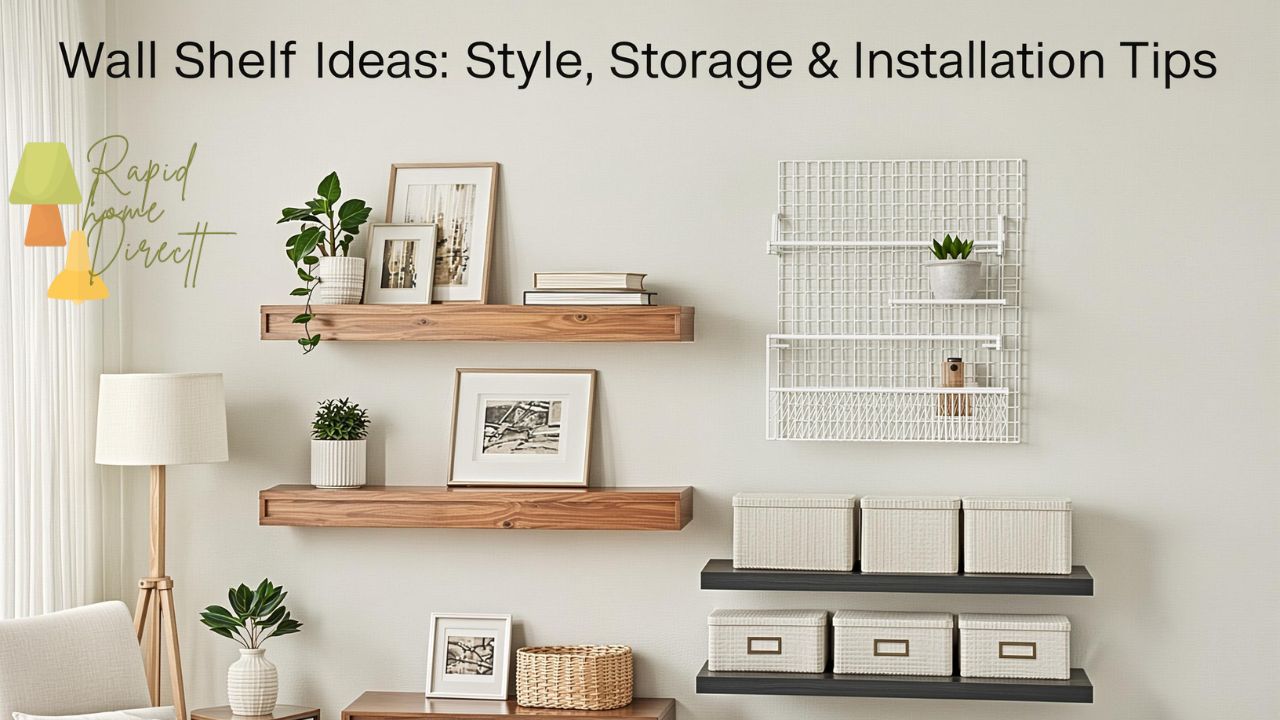
You know that blank wall in your home that feels awkwardly empty? It’s not begging for a massive renovation. It might just need a wall shelf.
A wall shelf has this quiet ability to transform a space. It adds storage without taking up floor area, displays your favorite pieces, and subtly elevates the design of a room. Whether you live in a compact apartment or a spacious house, the right shelving can redefine both organization and aesthetics.
In reality, thoughtful wall storage isn’t just about holding books or decor. It’s about creating visual balance, maximizing vertical space, and turning unused walls into functional design elements.

Table of Contents
Why a Wall Shelf Matters in Modern Homes
Types of Wall Shelf Designs
Materials and Build Quality
How to Choose the Right Wall Shelf
Installation Tips and Safety
Styling a Wall Shelf Like a Designer
Infographic: Wall Shelf Buying Checklist
Personal Background: Designers Who Popularized Vertical Storage
Frequently Asked Questions
Conclusion
Why a Wall Shelf Matters in Modern Homes
In today’s homes—especially urban apartments—space is precious. A wall shelf maximizes vertical space, allowing you to store and display items without crowding the floor.
Interior designers frequently emphasize vertical design as a key strategy in small-space living. By installing shelves strategically, homeowners can increase storage capacity by up to 30% in compact rooms.
However, the appeal isn’t only practical. Shelving introduces layers and dimension to flat walls. It adds warmth, personality, and visual interest, turning an ordinary wall into a curated focal point.

Types of Wall Shelf Designs
The beauty of a wall shelf lies in its versatility. From sleek minimalism to rustic charm, there’s a design for every aesthetic.
Floating Shelves
Floating shelves hide their brackets, creating a clean, modern look. They’re ideal for minimalist interiors.
Bracket Shelves
Visible metal or wooden brackets add character and industrial appeal.
Corner Shelves
Perfect for maximizing unused corners in bedrooms or offices.
Ladder Shelves
These lean against walls, offering multiple tiers for display and storage.
Box Shelves
Cubed or square shelving units create geometric interest and structured storage.
Choosing the right style depends on your room’s theme and storage needs.
Materials and Build Quality
Material impacts durability and appearance.
Solid Wood
Strong, durable, and timeless. Best for heavy loads like books.
Engineered Wood (MDF)
Affordable and lightweight, suitable for decorative purposes.
Metal
Industrial, modern, and highly durable.
Glass
Elegant but best for lighter decorative objects.
| Material | Strength | Maintenance | Ideal Use |
|---|---|---|---|
| Solid Wood | High | Moderate | Books, decor |
| MDF | Moderate | Easy | Lightweight items |
| Metal | High | Easy | Industrial decor |
| Glass | Moderate | Careful cleaning | Display items |
Investing in sturdy materials ensures your wall shelf remains secure and long-lasting.
How to Choose the Right Wall Shelf
Selecting the perfect shelf requires careful consideration.
Measure Your Wall
Ensure proportional sizing relative to wall space.
Check Weight Capacity
Always verify load limits before placing heavy objects.
Match Interior Style
Choose finishes that complement furniture and flooring.
Consider Depth
Shallow shelves suit decor; deeper ones accommodate books or storage bins.
A thoughtfully chosen wall shelf enhances both function and style.

Installation Tips and Safety
Proper installation is critical.
Locate Wall Studs
Mount shelves into studs for maximum support.
Use Wall Anchors
If studs aren’t available, use high-quality anchors.
Level Carefully
A slight tilt can disrupt both aesthetics and safety.
Avoid Overloading
Respect manufacturer weight guidelines.
Safe installation prevents accidents and prolongs shelf life.
Styling a Wall Shelf Like a Designer
A beautifully styled shelf balances form and function.
- Mix vertical and horizontal elements.
- Layer books with decorative objects.
- Add greenery for texture and life.
- Use framed photos or artwork for personalization.


The key is balance. Too many items create clutter; too few can look sparse.
Infographic: Wall Shelf Buying Checklist


Quick Checklist:
✔ Measure wall dimensions
✔ Confirm weight capacity
✔ Choose matching finish
✔ Verify installation hardware
✔ Plan styling layout
Personal Background: Designers Who Popularized Vertical Storage
Vertical storage became mainstream through designers who championed small-space solutions. Joanna Gaines, through her Magnolia brand, showcased floating shelves as both storage and decor statements. Similarly, minimalist designers embraced open shelving for modern interiors.
These designers transformed shelving from purely functional fixtures into design features. Their home decor empires generate multi-million-dollar revenues annually, largely driven by consumer demand for practical yet stylish solutions.
Their success reflects a growing trend: homeowners value furniture and fixtures that combine beauty with utility.
Frequently Asked Questions
What is the purpose of a wall shelf?
It provides vertical storage and decorative display space without occupying floor area.
Can a wall shelf hold heavy books?
Yes, if installed properly into studs and rated for sufficient weight.
Are floating shelves strong?
High-quality floating shelves with hidden brackets can support substantial loads.
How high should I install a wall shelf?
Typically 4–5 feet from the floor for eye-level display.
Are wall shelves suitable for small apartments?
Absolutely. They maximize storage without reducing floor space.
What decor works best on shelves?
Books, plants, framed photos, and small sculptures create balanced arrangements.
How do I prevent sagging?
Choose solid materials and avoid exceeding weight limits.
Can I install shelves without drilling?
Adhesive shelves exist but are suitable only for very lightweight items.
Conclusion
A wall shelf is more than a simple storage solution—it’s a design opportunity. It maximizes vertical space, adds character to blank walls, and helps organize your home efficiently. By selecting the right material, ensuring proper installation, and styling thoughtfully, you transform ordinary walls into meaningful design statements.
Sometimes, the smartest upgrades aren’t the biggest. They’re the ones that quietly improve your space, one shelf at a time.