Time quietly shapes our lives. Yet sometimes, it’s not the ticking that catches our attention—it’s the design on the wall. Wall clocks aren’t just tools for tracking hours; they’re visual anchors, statement pieces, and subtle reflections of personal style.
Wall clocks have evolved far beyond simple round faces with black numerals. Today, they blend art and function, offering a decorative focal point while keeping daily routines on track.
In reality, choosing the right clock can influence how a room feels—more modern, more cozy, more dramatic, or more minimal. It’s one of those small decor choices that unexpectedly transforms a space.

Table of Contents
Why Wall Clocks Matter in Interior Design
Types of Wall Clocks and Popular Styles
Materials, Mechanisms & Build Quality
How to Choose the Right Wall Clocks
Placement Ideas for Every Room
Silent vs Traditional Wall Clocks
Infographic: Wall Clock Buying Checklist
Personal Background: Designers & Brands That Shaped Clock Trends
Frequently Asked Questions
Conclusion
Why Wall Clocks Matter in Interior Design
At first glance, a clock seems purely functional. However, interior designers often treat wall clocks as sculptural elements. A large statement piece can define an entire room’s personality.
Studies in environmental psychology suggest that visible timekeeping devices influence productivity and time awareness. In home offices and kitchens especially, a clock enhances daily efficiency.
Beyond practicality, wall clocks introduce rhythm to a blank wall. They break up negative space and create balance within open layouts.
Types of Wall Clocks and Popular Styles
There’s an impressive range of styles available, catering to every aesthetic preference.
Modern Minimalist
Clean lines, neutral tones, and frameless designs define this style. Perfect for contemporary apartments.
Vintage & Rustic
Distressed finishes and Roman numerals evoke nostalgia and farmhouse charm.
Industrial
Metal frames and exposed gears suit loft-style interiors.
Oversized Statement Clocks
Large faces (over 30 inches) create dramatic impact in living rooms.
Digital Wall Clocks
Offer precision and additional features like temperature display.
Understanding style options ensures alignment with existing decor.
Materials, Mechanisms & Build Quality

Durability depends on both materials and internal mechanisms.
Wood
Warm and timeless. Best for rustic or transitional homes.
Metal
Durable and sleek. Common in industrial or modern settings.
Plastic & Acrylic
Lightweight and budget-friendly.
Quartz Movement
Ensures accurate timekeeping with minimal maintenance.
| Material | Durability | Aesthetic Impact | Best Room |
|---|---|---|---|
| Wood | High | Warm | Living room |
| Metal | High | Bold | Industrial spaces |
| Acrylic | Moderate | Minimal | Kitchen |
| Glass | Moderate | Elegant | Entryway |
Selecting high-quality mechanisms prevents annoying ticking and ensures longevity.
How to Choose the Right Wall Clocks
Selecting the perfect clock requires attention to scale and purpose.
Consider Room Size
Oversized clocks suit spacious walls, while smaller designs complement compact areas.
Match Color Palette
Coordinate finishes with furniture and fixtures.
Evaluate Noise Level
Silent mechanisms are ideal for bedrooms and offices.
Think About Visibility
Ensure numbers or markers are readable from typical viewing distance.
When thoughtfully selected, wall clocks blend seamlessly into the room while adding personality.
Placement Ideas for Every Room
Living Room
Place above the sofa or fireplace for balanced focal points.
Kitchen
Install near dining areas for convenience during cooking.
Bedroom
Choose silent designs to prevent sleep disruption.
Home Office
Mount at eye level to maintain productivity.
Strategic placement enhances both design and functionality.
Silent vs Traditional Wall Clocks
Ticking sounds can be comforting—or distracting. Modern quartz movements offer silent sweeping seconds hands, eliminating noise.
Traditional mechanical designs provide nostalgic charm but may require regular winding. Choosing between them depends on personal preference and room use.
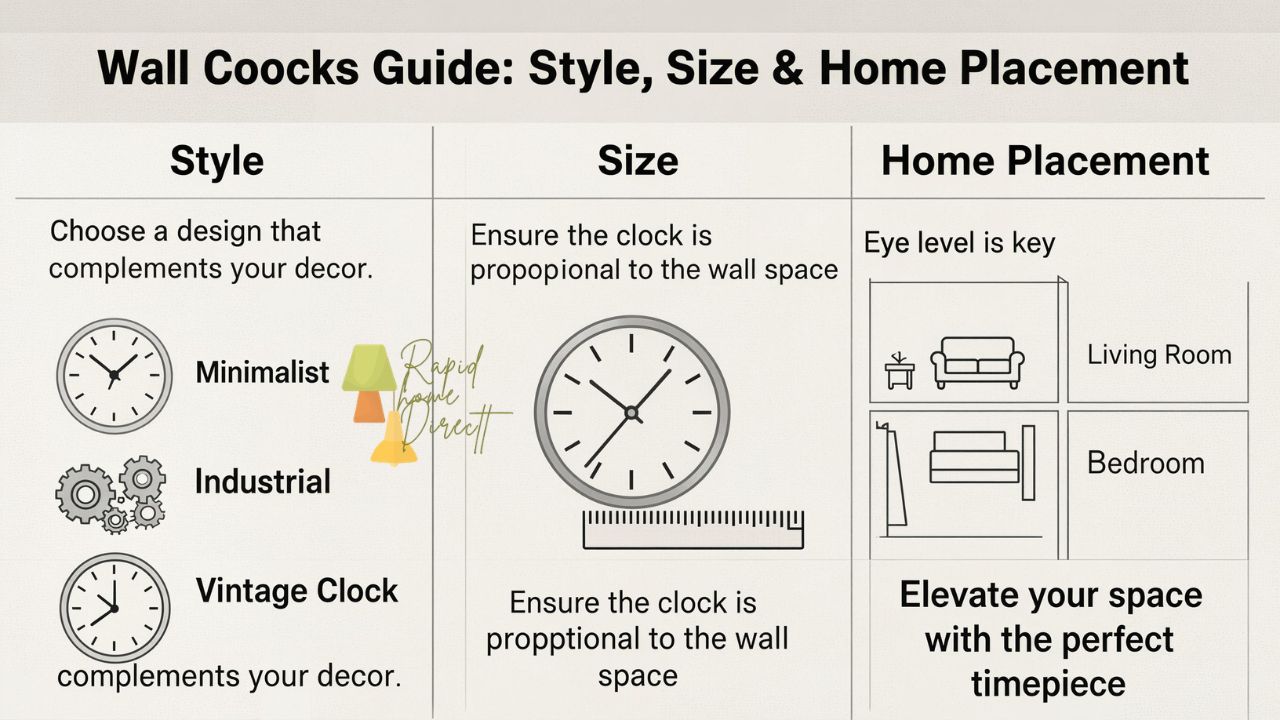
Infographic: Wall Clock Buying Checklist
Quick Checklist:
✔ Measure wall space
✔ Select appropriate size
✔ Choose quiet mechanism if needed
✔ Match decor style
✔ Confirm battery or power requirements
Personal Background: Designers & Brands That Shaped Clock Trends
Decorative clocks gained popularity through influential interior designers who emphasized statement wall art. Brands specializing in oversized metal clocks built profitable businesses around merging art with timekeeping.
Design entrepreneurs recognized that homeowners sought practical decor. By combining functionality with aesthetics, they transformed clocks into centerpiece accessories. Some leading decor brands generate millions annually by reimagining everyday items like wall clocks as artistic statements.
This evolution reflects a broader design trend—every object in a home can contribute to storytelling and atmosphere.

Frequently Asked Questions
What size wall clock should I choose?
For large walls, choose clocks 24–36 inches in diameter. Smaller rooms benefit from 12–20 inch designs.
Are silent wall clocks really quiet?
Yes, silent quartz movements eliminate ticking sounds.
Where should I hang a wall clock?
At eye level, typically 57–60 inches from the floor to the center.
Do oversized clocks look outdated?
Not at all. They remain popular as statement decor pieces.
What material is most durable?
Metal and solid wood offer long-lasting durability.
Can wall clocks make a room look bigger?
Large reflective designs can enhance perceived space.
Are digital wall clocks stylish?
Modern minimalist digital designs suit contemporary homes.
How often should I replace clock batteries?
Typically every 6–12 months depending on usage.
Conclusion
Wall clocks do more than mark time—they define atmosphere. From minimalist designs to bold industrial pieces, the right clock balances functionality with aesthetic appeal. By considering size, material, placement, and mechanism, you can select a piece that enhances your home’s personality while keeping life on schedule.
Sometimes, it’s not just about watching the clock. It’s about letting the right one elevate your space.