
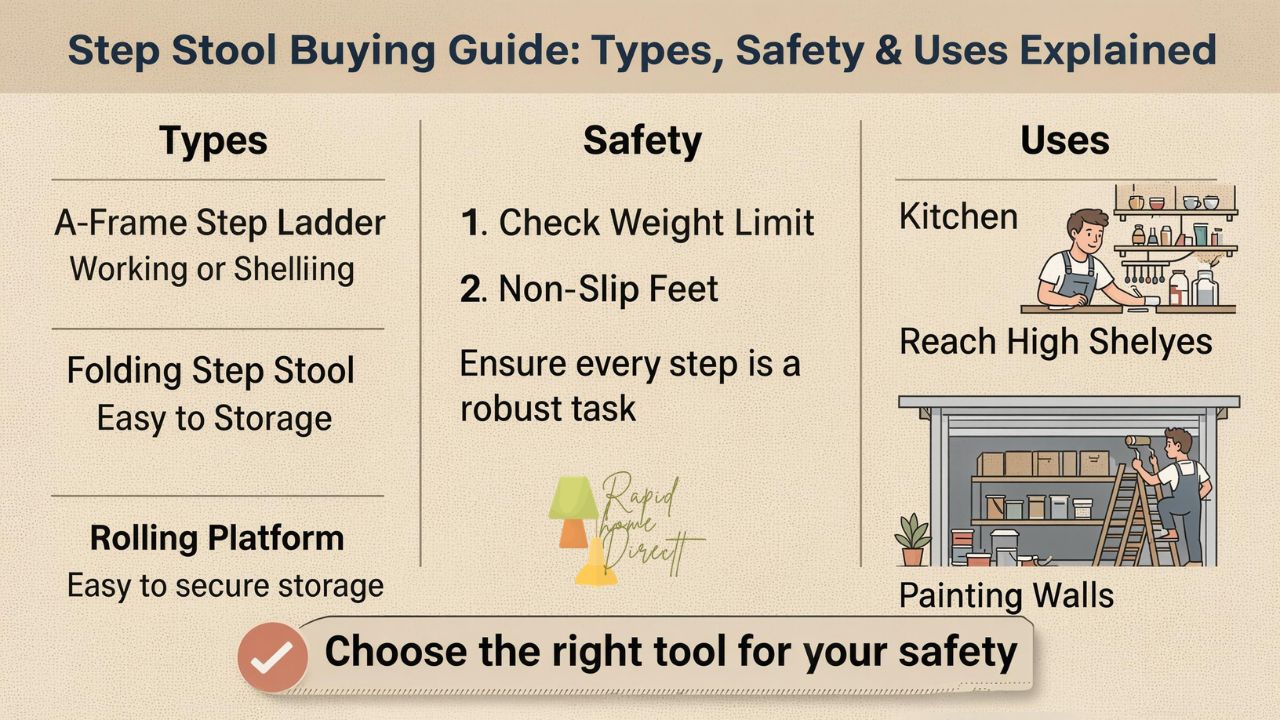
When was the last time you stood on a chair to reach something high—and felt that tiny flicker of fear? We’ve all done it. But a simple step stool can quietly solve that problem, making everyday tasks safer and surprisingly easier.
A step stool may seem like one of the most basic tools in a home, yet it plays a powerful role in kitchens, garages, offices, and even retail stores. From helping a child wash their hands to enabling an adult to change a light bulb without wobbling, this small piece of equipment delivers stability and confidence.
In reality, not all stools are created equal. Materials, weight capacity, portability, and design matter more than most people realize. Choosing the wrong one can lead to discomfort—or worse, injury. According to global safety reports, thousands of minor home injuries each year are linked to improper ladder or stool use. That statistic alone makes this topic worth exploring.

Whether you’re upgrading your home tools or buying your first one, this guide will walk you through everything you need to know about selecting the right step stool—without confusion, hype, or technical jargon.
Table of Contents
What Is a Step Stool?
The Evolution and History of the Step Stool
Types of Step Stool Designs
Materials: Wood, Plastic, or Metal?
Choosing the Right Step Stool for Your Needs
Safety Tips When Using a Step Stool
Step Stool for Kids: What Parents Should Know
Step Stool vs. Ladder: What’s the Difference?
Maintenance and Care Guide
Environmental Impact and Sustainable Options
Frequently Asked Questions
Conclusion
What Is a Step Stool?
A step stool is a small, portable platform designed to help individuals reach heights slightly above their natural standing level. Typically consisting of one or two steps, it provides stable elevation without the bulk of a full ladder.
Unlike large ladders, a step stool is compact and lightweight. Most models are easy to store under a sink, inside a closet, or behind a door. That portability is exactly what makes it indispensable in daily life.

Common uses include:
- Reaching high cabinets
- Changing light bulbs
- Cleaning ceiling fans
- Accessing top shelves in retail stores
- Helping children reach sinks
The simplicity of a step stool is what makes it universally useful.
The Evolution and History of the Step Stool
Historically, basic wooden blocks or handcrafted stools were used to elevate individuals in homes and workshops. In early European households, wooden stepping platforms were common kitchen fixtures.
During the industrial revolution, metal fabrication made folding models possible. This shift allowed easier storage and greater load capacity. By the mid-20th century, aluminum designs became popular due to their strength-to-weight ratio.
Today, ergonomic engineering has transformed the modern step stool. Anti-slip surfaces, rubber feet, and reinforced hinges have become standard safety features.
Types of Step Stool Designs
Single-Step Models
The simplest form. Ideal for quick reach tasks in kitchens or offices. Lightweight and often stackable.
Two-Step and Multi-Step Options
These provide additional height. Perfect for garages, workshops, and libraries where shelving runs high.
Folding Step Stool
Highly portable and space-saving. Popular in small apartments and dorm rooms.
Decorative Wooden Designs
Often used in farmhouse-style or rustic interiors. These combine function and aesthetics.
Heavy-Duty Industrial Models
Designed for warehouses and commercial environments. They support higher weight capacities and often include handrails.
Materials: Wood, Plastic, or Metal?
Wooden Step Stool
Classic and durable. It blends beautifully into traditional home décor. However, wood can absorb moisture if not sealed properly.
Plastic Models
Lightweight and budget-friendly. Many plastic designs include textured anti-slip surfaces. However, low-quality versions may crack under heavy load.
Metal and Aluminum
Strong, stable, and corrosion-resistant. Often used in garages or professional settings.
Below is a quick comparison:
| Material | Weight | Durability | Best For |
|---|---|---|---|
| Wood | Medium | High | Home décor & kitchens |
| Plastic | Light | Moderate | Kids & light tasks |
| Aluminum | Light | Very High | Workshops & retail |
Choosing the Right Step Stool for Your Needs
Selecting the right step stool depends on three primary factors: height, weight capacity, and frequency of use.
If you only need to reach the top kitchen shelf occasionally, a compact folding model works well. On the other hand, if you’re frequently accessing storage areas, investing in a reinforced aluminum stool may be smarter.
Consider:
- Weight rating (always check manufacturer limits)
- Anti-slip treads
- Rubberized feet
- Foldability
- Storage space
That said, never compromise safety for aesthetics.
Safety Tips When Using a Step Stool
Even the safest stool can become hazardous if used improperly.
Here are essential safety guidelines:
- Place on a flat, stable surface
- Avoid standing on the top cap unless designed for it
- Maintain three points of contact
- Do not overreach sideways
- Check hinges before use
In reality, most accidents happen due to rushing. Taking five extra seconds to position your stool correctly can prevent injury.
Step Stool for Kids: What Parents Should Know
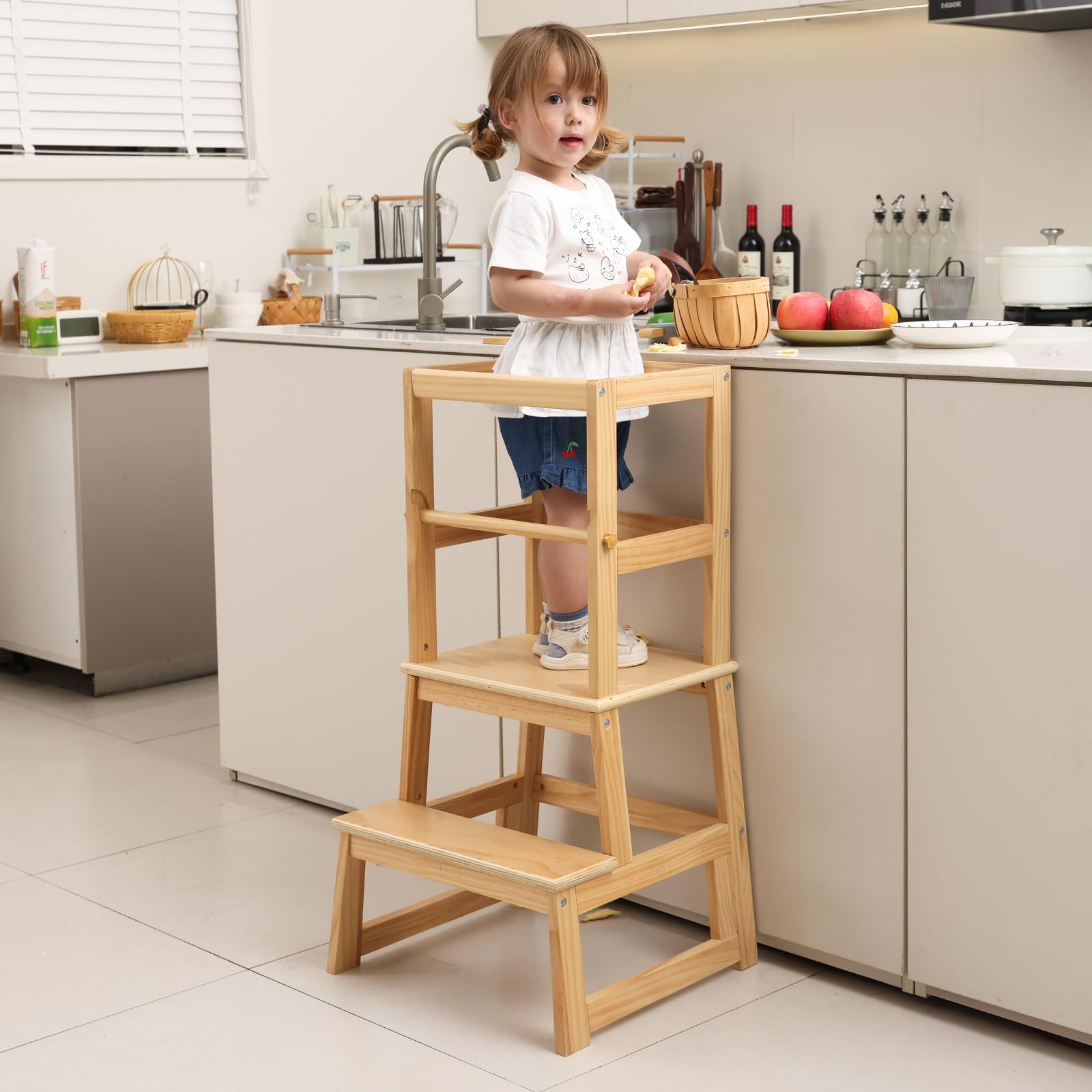
Children love independence. A step stool allows them to brush their teeth, wash hands, and help in the kitchen safely.
However, look for:
- Wide base design
- Rounded corners
- Non-slip rubber bottom
- Lightweight build
Montessori-inspired wooden stools are particularly popular for encouraging self-reliance.
Step Stool vs. Ladder: What’s the Difference?
Although often confused, a ladder is taller and designed for extended vertical reach. A step stool is intended for small height boosts.
If you’re painting walls or accessing roofs, use a ladder. If you’re grabbing cereal from the top shelf, use a step stool.
Choosing incorrectly can increase fall risk.
Maintenance and Care Guide
Proper care extends the lifespan of your step stool significantly.
- Clean regularly with mild detergent
- Tighten screws every few months
- Inspect rubber grips
- Store in dry areas
Wooden models benefit from occasional polishing, while aluminum types need hinge lubrication.
Environmental Impact and Sustainable Options
As sustainability becomes a growing concern, eco-friendly stools made from bamboo or recycled plastic are gaining popularity.
Bamboo grows faster than traditional hardwood and has impressive durability. Recycled plastic models reduce landfill waste while offering practical functionality.
Consumers increasingly choose products that balance utility and environmental responsibility.
Frequently Asked Questions
What is the standard height of a step stool?
Most household models range from 6 to 16 inches tall.
How much weight can a step stool hold?
It varies. Standard models support 200–300 pounds, while industrial versions exceed 350 pounds.
Are folding models safe?
Yes, provided they lock securely and are placed on even surfaces.
Can adults use a kids’ step stool?
Generally no. Kids’ models are not built for adult weight.
How do I prevent slipping?
Choose designs with rubber feet and textured steps.
Is wood better than plastic?
It depends on usage. Wood is sturdy and aesthetic; plastic is lightweight and affordable.
Can a step stool replace a ladder?
For minor reach tasks, yes. For higher work, no.
Conclusion
A humble step stool might not seem exciting at first glance, yet it quietly improves safety, convenience, and independence in daily life. From helping children grow confident to supporting adults in everyday chores, it remains one of the most underrated household tools.
The key is choosing wisely—considering material, design, weight rating, and usage environment. With the right model, that small boost in height can deliver a surprisingly big boost in confidence.
In the end, practical tools don’t need to be flashy. They just need to work—and a well-chosen step stool does exactly that.