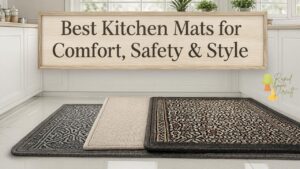
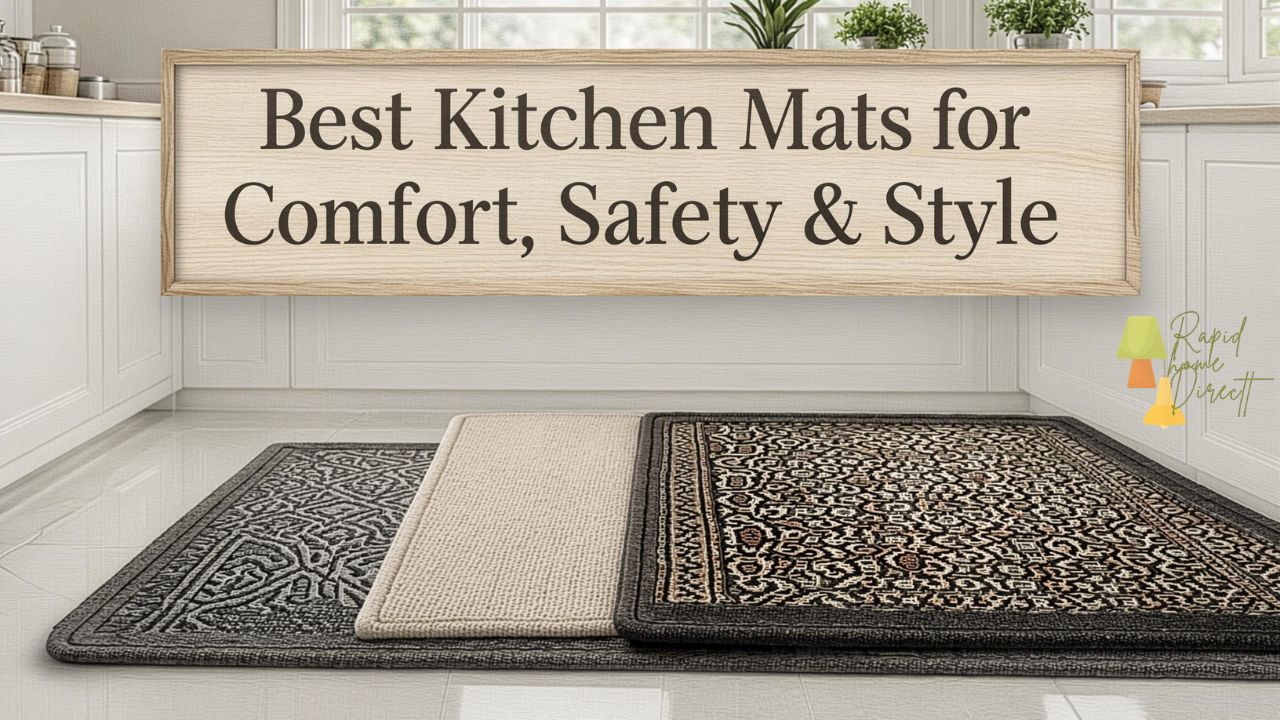
When you think about upgrading your kitchen, you probably imagine new cabinets, a fresh backsplash, or sleek appliances. But here’s the quiet truth: kitchen mats can change the way your space feels almost instantly.
If you’ve ever stood for an hour chopping vegetables or scrubbing dishes and felt that dull ache in your lower back, you already understand why this matters. The right floor mat doesn’t just look good. It protects your body, prevents slips, and subtly elevates the entire aesthetic of your kitchen.
In reality, most homeowners overlook the floor. Yet it’s the one surface we interact with every single day. Choosing the right kitchen mats is not just about decor; it’s about comfort, health, and safety combined.

Table of Contents
Why Kitchen Mats Matter More Than You Think
Types of Kitchen Mats
How to Choose the Right Kitchen Mats
Materials, Durability & Maintenance
Design, Style & Placement Tips
Health & Ergonomic Benefits
Market Trends & Industry Insights
FAQs
Conclusion
Why Kitchen Mats Matter More Than You Think
At first glance, a kitchen floor mat seems like a small accessory. However, it plays several crucial roles:
- Reduces strain on feet, knees, and lower back
- Prevents slips in wet areas
- Protects flooring from spills and scratches
- Adds warmth and personality to the space
According to ergonomic research, standing on hard surfaces like tile or hardwood for extended periods can increase muscle fatigue and compress spinal discs. That’s where cushioned surfaces come in. A well-designed mat distributes weight evenly and encourages subtle muscle movement, improving circulation.
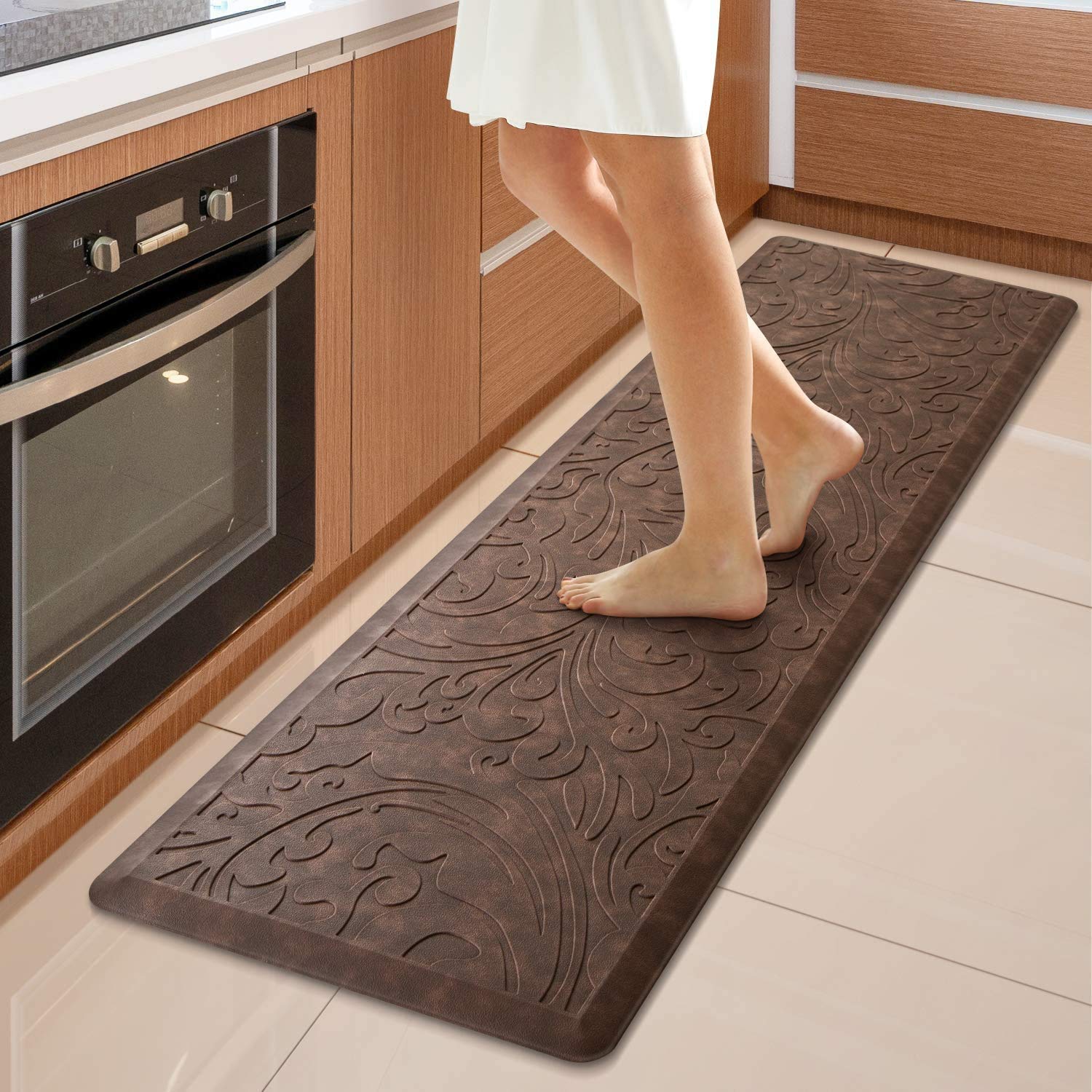
In homes where cooking is a daily ritual—not just an occasional task—the difference becomes noticeable within days.
Types of Kitchen Mats
Anti-Fatigue Kitchen Mats
These are designed specifically for comfort. Typically made from foam or gel materials, anti-fatigue mats provide cushioning that reduces pressure on joints.
They are ideal for:
- People who cook frequently
- Bakers who stand for hours
- Households with hard tile or concrete flooring

Anti-fatigue kitchen mats often range from ½ inch to 1 inch thick. The thicker the mat, the greater the shock absorption—but balance is key. Too soft, and you lose stability.
Non-Slip Kitchen Rugs
Safety is a priority, especially near sinks or stoves. Non-slip backing—usually rubber or latex—prevents sliding on smooth surfaces.
Look for:
- Textured bottoms
- Water-resistant tops
- Beveled edges to prevent tripping
Waterproof & Spill-Resistant Mats
Spills are inevitable. Oil splashes, water droplets, and sauce drips happen daily. Waterproof mats repel moisture, making cleanup easy with just a damp cloth.
These are particularly popular in busy family kitchens.
Kitchen Runners
Long, narrow mats work beautifully in galley kitchens or along extended counters. They visually elongate the space while providing comfort across a larger walking area.
How to Choose the Right Kitchen Mats
Choosing the right mat involves more than picking a color that matches your cabinets.
Consider Your Flooring Type
- Tile and stone: Choose thicker cushioning.
- Hardwood: Ensure backing won’t trap moisture.
- Vinyl: Look for non-staining materials.
Think About Size & Placement
Most people place mats:
- In front of the sink
- Near the stove
- Along the main prep counter
Measure before buying. A mat that’s too small looks awkward. Too large, and it disrupts traffic flow.
Thickness Matters
A good anti-fatigue mat typically measures 0.5–0.75 inches thick. This provides comfort without becoming a tripping hazard.
Cleaning Requirements
If you cook daily, easy cleaning is essential. Some mats are machine washable; others require spot cleaning.
Materials, Durability & Maintenance
Different materials offer different benefits. Understanding them helps you make a long-term investment.
| Material | Pros | Cons | Best For |
|---|---|---|---|
| PVC | Waterproof, durable | Can flatten over time | High-traffic kitchens |
| Foam | Excellent cushioning | Less stylish | Comfort-focused users |
| Gel | Long-lasting support | Higher price | Frequent cooks |
| Cotton | Washable, decorative | Less water-resistant | Light cooking areas |
| Rubber | Strong grip | Industrial look | Safety-focused spaces |
In reality, the best material depends on your lifestyle. If you cook elaborate meals daily, durability matters more than trendiness. If aesthetics dominate your design vision, decorative runners may take priority.
Design, Style & Placement Tips
Matching Your Kitchen Aesthetic
Modern kitchens benefit from minimalist mats in neutral tones like grey, beige, or charcoal. Farmhouse kitchens often look stunning with patterned runners or subtle floral prints.
However, contrast can be powerful. A bold geometric mat in a white kitchen creates visual interest without overwhelming the space.
Strategic Placement
Avoid placing mats in high-traffic walkways where people pivot quickly. Instead, position them where you stand the longest.
A popular layout includes:
- One mat at the sink
- One near the stove
- A runner along the island
Health & Ergonomic Benefits
Standing on hard floors for more than two hours a day can increase lower back strain significantly. Over time, this may contribute to posture issues.
The right kitchen mats:
- Improve blood circulation
- Reduce joint compression
- Support better posture
- Decrease muscle fatigue
In fact, many anti-fatigue designs are inspired by industrial work environments where employees stand for eight-hour shifts. Manufacturers adapted that technology for home kitchens.
For anyone who enjoys cooking but dreads the discomfort afterward, this small upgrade can feel transformative.
Market Trends & Industry Insights
The global floor mat market has grown steadily in the last decade, driven by rising interest in ergonomic home products. With more people working from home, attention to comfort has expanded beyond office chairs and desks.
Interestingly, the same technology used in standing desk mats now appears in premium kitchen mats. Brands market them as lifestyle essentials rather than simple accessories.
Personal Background & Industry Leadership
One notable entrepreneur in the ergonomic mat industry is the founder of GelPro, a brand that helped popularize premium anti-fatigue mats for residential use. Starting from industrial flooring solutions, the company shifted toward home decor markets and saw rapid growth in the early 2000s.
Through retail partnerships and direct-to-consumer strategies, such companies transformed what was once an industrial product into a stylish home essential. Industry reports estimate that top ergonomic mat brands generate multi-million-dollar annual revenues, reflecting the rising demand for comfort-driven design.
This shift reveals something deeper: modern homeowners value wellness within everyday environments. The kitchen is no longer just functional—it’s experiential.
Maintenance & Longevity Tips
Even the best mats need proper care.
- Wipe spills immediately.
- Avoid harsh chemicals.
- Rotate mats every few months to ensure even wear.
- Allow underside to air out occasionally to prevent trapped moisture.
Regular maintenance can extend lifespan from 2 years to 5 years or more.
Common Mistakes to Avoid
- Buying purely for aesthetics without checking thickness
- Ignoring slip resistance
- Choosing materials incompatible with flooring
- Forgetting to measure space accurately
- Overcrowding small kitchens with oversized runners
Sometimes, less is more. One high-quality mat is better than three poorly chosen ones.
FAQs
What thickness is best for kitchen mats?
Most experts recommend 0.5–0.75 inches for comfort and stability. Thicker options work well in heavy-use kitchens.
Are kitchen mats safe on hardwood floors?
Yes, as long as they have non-staining, breathable backing. Avoid rubber that traps moisture.
How often should kitchen mats be replaced?
High-quality mats last 3–5 years. Budget versions may need replacement after 1–2 years.
Can kitchen mats help with back pain?
They can reduce strain and fatigue. While not a medical solution, many users report noticeable comfort improvements.
Are anti-fatigue mats worth the price?
For people who cook frequently, absolutely. The long-term comfort often justifies the investment.
Do washable kitchen rugs lose cushioning?
Some do over time. Always check manufacturer specifications before machine washing.
Should I use multiple mats?
Yes, especially in larger kitchens. Place them in primary standing zones rather than walkways.
Are eco-friendly options available?
Yes, many brands now offer mats made from recycled PVC or sustainable materials.
Conclusion
The kitchen is often called the heart of the home. It’s where meals are prepared, conversations happen, and daily routines unfold. Yet comfort is frequently overlooked.
Choosing the right kitchen mats is a simple, affordable upgrade that delivers immediate impact. From reducing physical strain to enhancing design aesthetics, the benefits are practical and personal.
In the end, it’s not just about protecting your floors. It’s about protecting yourself—your comfort, your posture, and your everyday experience in the space you use most.