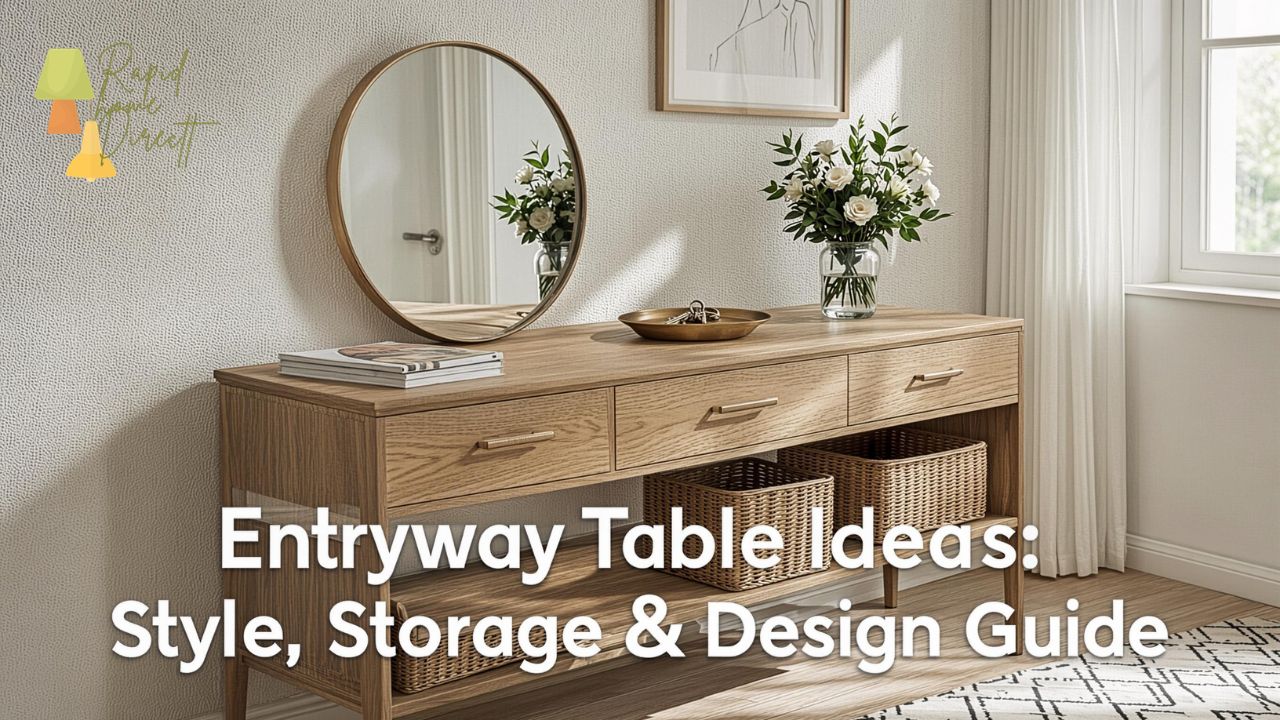
The first impression of your home isn’t your living room or kitchen—it’s the space just inside your door. And more often than not, that first impression revolves around one key piece of furniture: the entryway table. Whether your home is grand and spacious or cozy and compact, the right table in your foyer can instantly elevate the atmosphere.
An entryway table isn’t just decorative. It’s functional, emotional, and surprisingly strategic. It holds your keys after a long day, catches the mail before it piles up, and sets the mood for what lies beyond. In many homes, it becomes the silent host—welcoming guests before you even say hello.

If you’ve ever walked into a home and thought, “This feels warm,” chances are the entry space was thoughtfully styled. Let’s explore how you can create that same feeling—with intention, style, and smart design choices.
Table of Contents
What Is an Entryway Table?
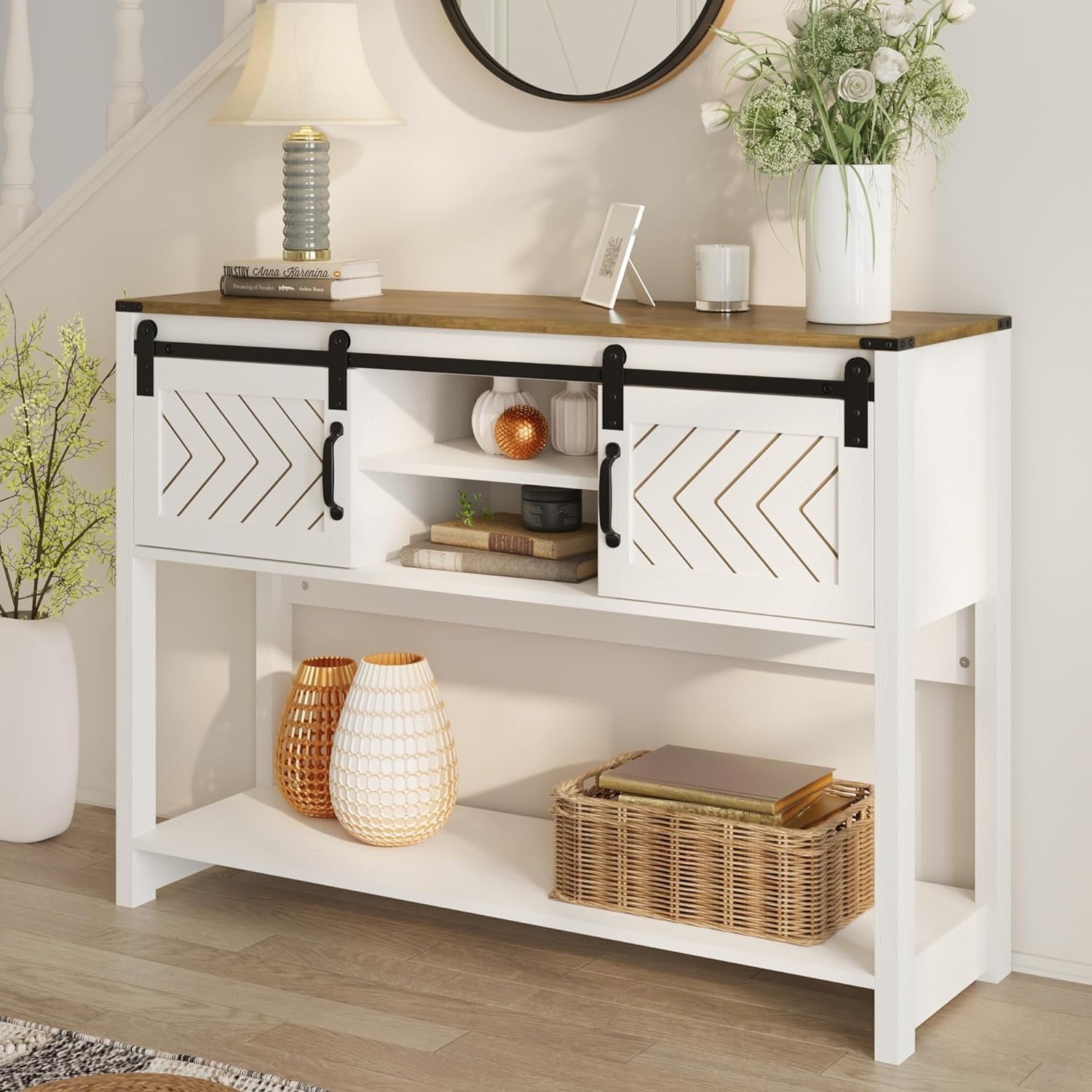
An entryway table is a slim, often rectangular or half-moon table placed in a foyer, hallway, or just inside the front door. It’s also called a console table, foyer table, or hallway table.
Definition and Purpose
At its core, an entryway table serves three primary functions:
- A drop zone for essentials (keys, wallets, bags)
- A decorative focal point
- A subtle divider between public and private spaces
Unlike bulky furniture, it’s designed to be narrow—typically 10 to 18 inches deep—so it doesn’t obstruct walkways.
Where It’s Typically Placed
- Directly opposite the front door
- Against a wall in a hallway
- Behind a sofa (in open layouts)
- Beneath a statement mirror or artwork
The placement determines not just aesthetics but practicality.
Why Every Home Needs an Entryway Table
You might think it’s optional—but in reality, it’s one of the most impactful furniture pieces you can own.
First Impressions Matter
According to interior design surveys, 68% of homeowners believe their entry area influences how guests perceive their home. A thoughtfully styled entryway table sets the tone instantly.
Functional Daily Use
Let’s be honest—how often have you misplaced your keys? A designated spot on your entry console eliminates that daily frustration.
Common uses include:
- Mail sorting
- Shoe storage (with baskets underneath)
- Displaying seasonal decor
- Charging stations for devices
On the other hand, skipping this piece often results in clutter accumulating near the door.
Choosing the Right Entryway Table for Your Space

Selecting the perfect entryway table requires more than picking something pretty.
Measure First
Before shopping:
- Measure wall width
- Keep at least 36 inches of walkway clearance
- Match table height to surrounding elements (usually 28–32 inches)
Match Your Home’s Architecture
A modern apartment calls for sleek metal or glass designs. A rustic farmhouse? Solid wood with distressed finishes works beautifully.
Consider Storage Needs
Ask yourself:
- Do you need drawers?
- Will baskets help?
- Is open shelving enough?
A family with kids may prioritize hidden storage, while minimalists may prefer clean lines.
Popular Styles and Design Trends
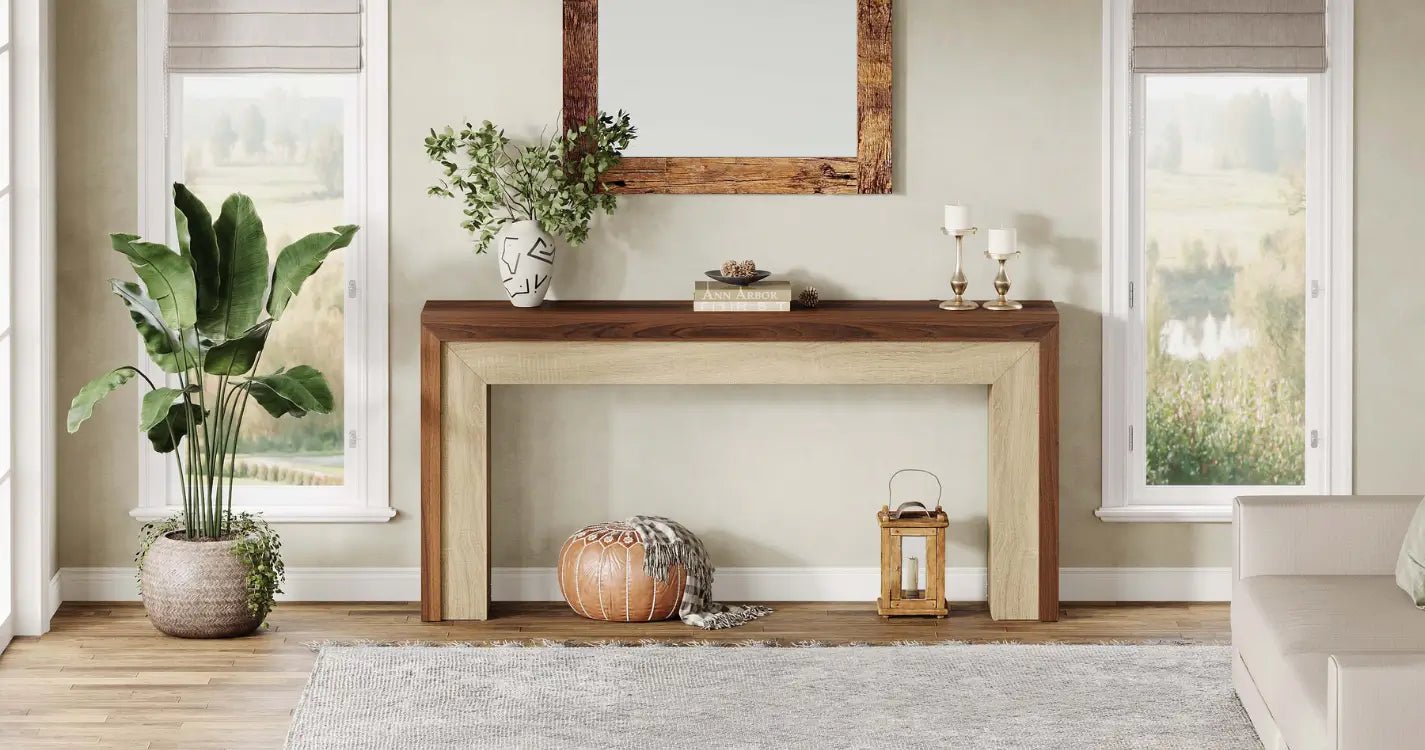
Interior design trends evolve, but certain entryway styles remain timeless.
Modern Minimalist
Clean lines, neutral tones, matte finishes. Think:
- Black metal legs
- White marble tops
- Slim silhouettes
Farmhouse Charm
Rustic wood, antique hardware, woven baskets. This style feels warm and inviting.
Mid-Century Modern
Tapered legs, walnut finishes, geometric simplicity. Perfect for vintage-inspired homes.
Industrial Edge
Raw wood paired with iron frames. Ideal for loft-style spaces.
Materials and Durability Considerations
Choosing the right material affects longevity and maintenance.
| Material | Pros | Cons |
|---|---|---|
| Solid Wood | Durable, timeless | Higher cost |
| MDF | Budget-friendly | Less durable |
| Glass | Elegant look | Fingerprints visible |
| Metal | Strong, modern | Can feel cold visually |
In high-traffic homes, solid wood tends to last longer.
How to Decorate an Entryway Table Like a Designer
Styling is where personality shines.

The Rule of Three
Designers often use odd-number groupings:
- Lamp
- Decorative tray
- Small plant
This creates visual balance.
Add Height Variation
Combine:
- Tall mirror or artwork
- Medium-height lamp
- Small decorative objects
Use Layers
Stack books, add framed photos, place a bowl for keys. Layering adds depth.
Seasonal Rotation
Switch decor quarterly:
- Spring: fresh flowers
- Fall: warm tones, candles
- Winter: greenery, metallic accents
Storage Solutions and Organization Hacks

An entryway table becomes a powerhouse when paired with smart organization.
Drawer Dividers
Keep sunglasses, pens, and spare change organized.
Baskets Underneath
Perfect for:
- Shoes
- Pet leashes
- Kids’ backpacks
Wall Hooks Above
Combine a console with hooks for coats and hats.
Entryway Table for Small Spaces

Living in an apartment? Don’t worry.
Go Narrow
Look for tables under 12 inches deep.
Floating Shelf Alternative
A floating console saves floor space entirely.
Mirror Trick
Place a mirror above your entryway table to visually double the space.
DIY and Budget-Friendly Ideas
You don’t have to spend thousands.
Repurpose Furniture
Old desk? Remove drawers.
Vintage dresser? Use as statement console.
Thrift and Refinish
Sand, repaint, replace knobs—instant transformation.
Personal Background & Industry Insights

Interior styling around entry spaces became popular in the early 2000s with the rise of lifestyle blogging and home renovation shows. Designers like those featured on HGTV helped turn foyers into curated spaces rather than transitional afterthoughts.
Many professional stagers report that upgrading the entry area increases perceived home value during resale. In competitive markets, even a styled entryway table can influence buyer emotion—a factor that often outweighs logic in purchasing decisions.
From a business perspective, the console furniture market continues to grow annually, driven by urban living trends and smaller home footprints.
Frequently Asked Questions
FAQ
What size entryway table should I buy?
It depends on your wall width and walkway clearance. Most are 28–32 inches tall and 10–18 inches deep.
Can I use a dresser as an entryway table?
Absolutely. It offers extra storage and creates a bold statement.
What do you put on an entryway table?
Common items include lamps, mirrors, trays, plants, artwork, and seasonal decor.
Is an entryway table necessary in small homes?
Not mandatory—but highly beneficial for organization and style.
How do I prevent clutter?
Use trays, baskets, and drawer dividers to maintain structure.
Should the table match other furniture?
Not necessarily. Complementing tones often look more curated than perfectly matched sets.
What’s the best material for durability?
Solid wood offers long-term durability, especially in busy households.
Can I place one behind a sofa instead?
Yes, that’s common in open-concept layouts.
Conclusion
A thoughtfully chosen entryway table does more than fill empty wall space—it transforms how your home feels. It’s where daily routines begin and end. It creates structure in chaos. It offers warmth in simplicity.
Whether you lean modern, rustic, or eclectic, investing time into selecting and styling the right piece pays off every single day. And when guests step inside and pause—even for a second—you’ll know you’ve created something intentional, welcoming, and beautifully yours.