
Introduction
Walk into a room filled with greenery and you immediately feel it—the air seems lighter, calmer, somehow fresher. That’s not just your imagination. Air purifying plants have become a favorite for homeowners who want cleaner indoor air without complicated machines or expensive filters.
We spend nearly 90% of our time indoors, breathing air that can contain pollutants from furniture, paints, cleaning products, and electronics. The idea that living plants can help improve that environment is both comforting and practical.
In this guide, we’ll explore how air purifying plants work, which varieties are best for different rooms, and how to care for them so they thrive. Whether you live in a compact apartment or a spacious home, the right plants can transform your indoor environment naturally.
What Are Air Purifying Plants?
Air purifying plants are indoor plants believed to help remove certain airborne toxins while increasing oxygen levels and humidity. The concept gained attention after the well-known NASA Clean Air Study, which explored how specific plants could reduce volatile organic compounds (VOCs) like benzene, formaldehyde, and trichloroethylene in controlled environments.
While plants alone won’t replace mechanical ventilation systems, they can contribute to a healthier indoor atmosphere when combined with proper airflow and cleaning habits.
How They Help Improve Indoor Air
Plants may improve air quality in several ways:
- Absorbing pollutants through leaves
- Breaking down toxins via root-zone microorganisms
- Releasing oxygen during photosynthesis
- Increasing humidity, which reduces dry air irritation
Beyond measurable effects, plants also improve psychological well-being. Research consistently shows that greenery reduces stress, enhances focus, and promotes relaxation.
Top 10 Air Purifying Plants for Your Home
Choosing the right plants depends on lighting, space, and maintenance preferences. Below are some of the most popular and effective options.
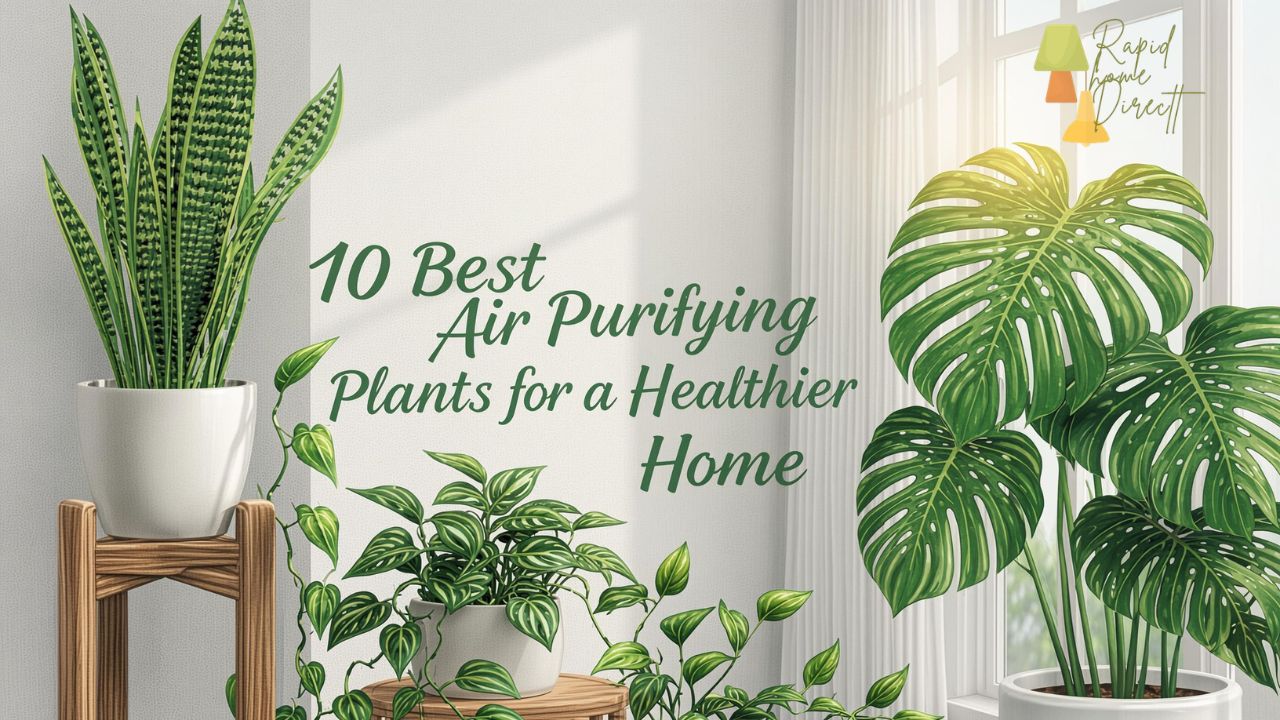
Snake Plant (Sansevieria)

Also known as “Mother-in-Law’s Tongue,” this hardy plant is ideal for beginners. It tolerates low light, irregular watering, and fluctuating temperatures.
Why it’s popular:
- Converts CO₂ to oxygen at night
- Thrives in low light
- Requires minimal watering
Snake plants are especially great for bedrooms.
Peace Lily (Spathiphyllum)

With elegant white blooms, peace lilies combine beauty and functionality. They’re often listed among the best air purifying plants for removing formaldehyde and ammonia.
Care tips:
- Prefers indirect light
- Keep soil slightly moist
- Wipe leaves occasionally for better absorption
After these two classics, let’s explore more versatile options.
Spider Plant (Chlorophytum comosum)

Spider plants are forgiving and fast-growing. Their arching leaves and baby offshoots make them visually appealing and easy to propagate.
They’re ideal for kitchens and living rooms where air circulation is strong.
Areca Palm
This feathery palm acts as a natural humidifier. It’s perfect for larger rooms that need a touch of tropical elegance.
Aloe Vera
Beyond skincare benefits, aloe vera helps absorb common indoor toxins. It thrives in bright, indirect sunlight and requires infrequent watering.
Boston Fern
Excellent for humidity control, Boston ferns prefer cool environments and indirect light. They’re great for bathrooms or shaded corners.
Rubber Plant
With broad, glossy leaves, rubber plants can remove airborne toxins effectively. They grow tall, making them ideal statement plants.
Bamboo Palm
This plant works well in low-light offices and can help reduce benzene and formaldehyde.
English Ivy
Often used in hanging baskets, English ivy may help reduce airborne mold particles.
Chinese Evergreen
Highly adaptable and tolerant of low light, this plant is a favorite for beginners.
How Many Air Purifying Plants Do You Really Need?
A common question is how many air purifying plants are necessary to see a noticeable effect. While there’s no universal number, experts suggest:
- 1 medium plant per 100 square feet for aesthetic and humidity benefits
- Multiple plants for larger spaces
- A mix of species for broader pollutant coverage
Keep in mind that plant density, ventilation, and room size all influence effectiveness.
Best Rooms to Place Air Purifying Plants
Bedroom
Choose snake plants or peace lilies. Their nighttime oxygen production and calming appearance support better sleep.
Living Room
Large statement plants like rubber plants or areca palms work well here.
Kitchen
Spider plants and aloe vera handle temperature shifts and occasional humidity.
Bathroom
Boston ferns thrive in moisture-rich environments.
Caring for Your Plants the Right Way
Healthy plants are more effective. Follow these simple principles:
Light Matters
Understand whether your plant prefers low, medium, or bright indirect light. Too much sun can scorch leaves; too little can stunt growth.
Water Wisely
Overwatering is the most common mistake. Allow soil to dry slightly between waterings for most species.
Clean the Leaves
Dust blocks sunlight and reduces photosynthesis. Gently wipe leaves every few weeks.
Rotate Plants
Turning plants occasionally ensures even growth and exposure to light.
Do Air Purifying Plants Really Work?
Scientific research shows that plants can remove certain toxins in controlled environments. However, real-world conditions vary. Ventilation systems, open windows, and air purifiers play a bigger role in significant air cleaning.
That said, combining plants with good airflow creates a balanced indoor ecosystem. Plus, the mental health benefits of greenery are undeniable.
Additional Benefits Beyond Air Quality
Air purifying plants do more than filter air. They:
- Reduce stress and anxiety
- Enhance concentration and productivity
- Add natural decor
- Increase indoor humidity
- Support sustainable living habits
In workspaces, even a single plant can make an environment feel more inviting and less sterile.
FAQ
Frequently Asked Questions
Are air purifying plants safe for pets?
Some plants like peace lilies and English ivy can be toxic to pets. Always check pet-friendly lists before purchasing.
Do air purifying plants replace air purifiers?
No. They complement ventilation systems but don’t fully replace mechanical filtration.
How long does it take to see results?
Improvements in ambiance and humidity can be noticed quickly, but toxin reduction depends on many factors.
Which plant is best for beginners?
Snake plants and spider plants are among the easiest to maintain.
Can I place plants in low-light rooms?
Yes. Chinese evergreen and snake plants tolerate low light conditions well.
Do plants increase humidity?
Yes, through transpiration, plants release moisture into the air, helping reduce dryness.
Are flowering plants better at purifying air?
Not necessarily. Leaf surface area often plays a bigger role than flowers.
How often should I repot indoor plants?
Typically every 1–2 years, depending on growth rate.
Conclusion
Bringing air purifying plants into your home is one of the simplest ways to create a fresher, more inviting indoor space. While they’re not a magic solution for air pollution, their combined aesthetic, psychological, and environmental benefits make them well worth the effort.
With thoughtful placement, proper care, and a variety of species, you can transform your living space into a greener, healthier sanctuary—one plant at a time.