Introduction
Walk into any beautifully designed home, and you’ll notice something subtle yet powerful tying everything together—the living room rug. It’s not just a decorative piece; it’s the foundation of comfort, style, and personality in your space.
A well-chosen living room rug can instantly make a room feel warmer, larger, and more inviting. On the other hand, the wrong one? It can throw off the entire vibe, no matter how expensive your furniture is. That’s why choosing the right rug isn’t just about color—it’s about balance, proportion, and purpose.

If you’ve ever felt overwhelmed by sizes, textures, or styles, you’re not alone. This guide will walk you through everything you need to know—so you can confidently choose a rug that feels just right for your home.
Table of Contents
What Is a Living Room Rug?
Types of Living Room Rug Styles
Materials Used in Living Room Rugs
How to Choose the Perfect Living Room Rug
Benefits of Using a Living Room Rug
Rug Placement and Styling Tips
Personal Experience with Living Room Rug Styling
Common Mistakes to Avoid
Future Trends in Living Room Rugs
FAQ
Conclusion
What Is a Living Room Rug?
Definition and Purpose
A living room rug is a large textile floor covering designed specifically to enhance comfort, define space, and elevate the aesthetic of a living area.
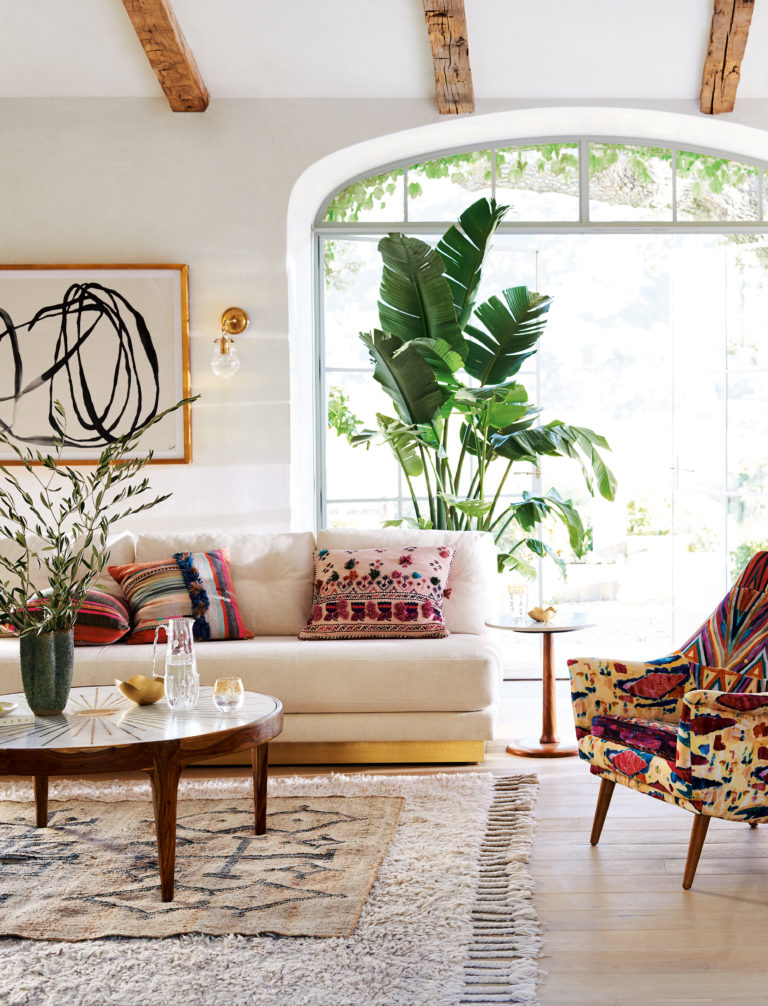
It serves multiple purposes:
- Adds warmth underfoot
- Reduces noise
- Anchors furniture
- Enhances visual harmony
Why It’s Essential
In reality, a living room without a rug often feels incomplete. The rug acts as a unifying element, bringing together sofas, tables, and decor into one cohesive design.
Types of Living Room Rug Styles
Modern Rugs
Characterized by:
- Clean lines
- Neutral tones
- Minimal patterns
Perfect for contemporary homes.
Traditional Rugs
These feature:
- Rich colors
- Detailed patterns
- Classic designs
Ideal for elegant and timeless interiors.
Bohemian Rugs
Known for their:
- Vibrant colors
- Eclectic patterns
- Relaxed vibe
Great for creative spaces.
Shag Rugs
Soft and luxurious, shag rugs:
- Provide maximum comfort
- Add a cozy feel
Materials Used in Living Room Rugs
Natural Fibers
- Wool: Durable, soft, and long-lasting
- Cotton: Lightweight and affordable
- Jute: Eco-friendly and textured
Synthetic Fibers
- Polypropylene: Stain-resistant and budget-friendly
- Nylon: Durable and easy to clean
Material Comparison Table
| Material | Durability | Comfort | Maintenance |
|---|---|---|---|
| Wool | High | High | Medium |
| Cotton | Medium | Medium | Easy |
| Jute | Medium | Low | Medium |
| Synthetic | High | Medium | Easy |
How to Choose the Perfect Living Room Rug

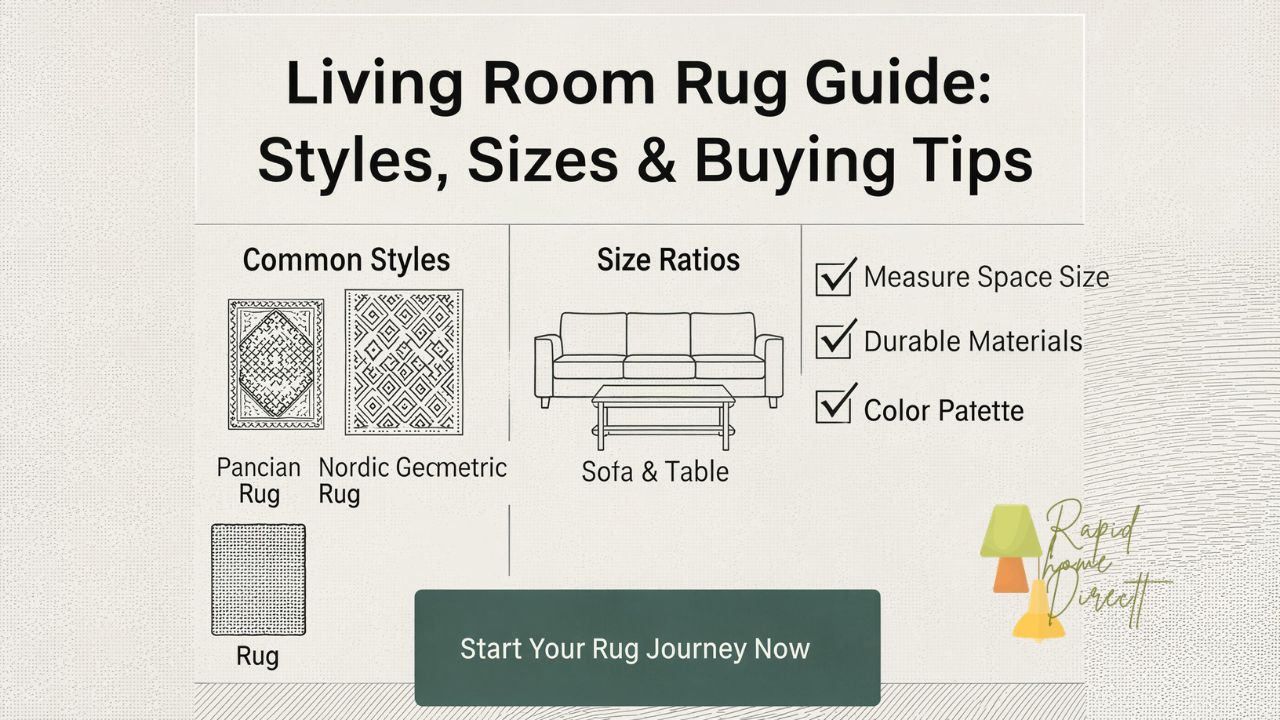
Size Matters
One of the biggest mistakes people make is choosing the wrong size.
General rules:
- Large rugs should fit under furniture
- Small rugs should define specific areas
Color and Pattern
Choose based on your room:
- Neutral tones for calm spaces
- Bold patterns for statement pieces
Lifestyle Considerations
If you have:
- Kids → Choose stain-resistant rugs
- Pets → Opt for durable materials
Budget
Rugs vary widely in price. Invest where it matters—durability and comfort.
Benefits of Using a Living Room Rug
Comfort and Warmth
Walking barefoot on a soft rug feels:
- Cozy
- Relaxing
- Inviting
Noise Reduction
Rugs absorb sound, making rooms quieter and more peaceful.
Visual Appeal
A living room rug can:
- Define spaces
- Add color
- Enhance design
Rug Placement and Styling Tips

Under Furniture
Place rugs so that:
- Front legs of sofas rest on the rug
- Coffee table sits centered
Layering Rugs
Layering adds depth:
- Combine textures
- Mix patterns carefully
Centering the Room
Your rug should anchor the room—not float awkwardly.
Personal Experience with Living Room Rug Styling
A few years ago, I bought a beautiful sofa and coffee table, expecting my living room to feel complete. But something was missing. The space felt cold—almost unfinished.
Then I added a living room rug.
Everything changed.
The room suddenly felt grounded, warmer, and more inviting. It wasn’t just about aesthetics—it changed how the space felt emotionally. Friends noticed immediately. It became a place where people wanted to sit, relax, and stay longer.
That experience taught me: a rug isn’t optional—it’s essential.
Common Mistakes to Avoid
Choosing the Wrong Size
Too small rugs make rooms feel disconnected.
Ignoring Material
Not all rugs are suitable for high-traffic areas.
Overmatching
Everything doesn’t need to match perfectly—contrast adds character.
Future Trends in Living Room Rugs
Sustainable Materials
Eco-friendly rugs made from:
- Recycled fibers
- Organic materials
Smart Rugs
Emerging technology may include:
- Heated rugs
- Built-in sensors
Bold Designs
Expect:
- Unique patterns
- Artistic expressions

FAQ
What size living room rug should I get?
It depends on your space, but larger rugs that fit under furniture are generally.
Are living room rugs necessary?
Yes, they enhance comfort, style, and functionality.
What is the best material for a living room rug?
Wool is often considered the best due to durability and comfort.
How do I clean a living room rug?
Vacuum regularly and use professional cleaning for deep stains.
Can I layer rugs?
Yes, layering adds texture and visual interest.
Do rugs make a room look bigger?
Yes, the right rug size and placement can create the illusion of space.
How often should I replace a rug?
Every 5–10 years depending on quality and usage.
Are expensive rugs worth it?
High-quality rugs last longer and offer better comfort.
Conclusion
At the end of the day, a living room rug isn’t just another decor item—it’s the piece that ties everything together. It brings warmth, defines your space, and adds a layer of comfort that furniture alone simply can’t provide.
Whether you prefer bold designs or subtle textures, investing time in choosing the right rug will always pay off. Because when your space feels right, everything else just falls into place.