
There’s something almost nostalgic about spreading a tablecloth across a dining table. It signals intention. It says this meal matters. Whether it’s a quiet weeknight dinner or a festive gathering, a tablecloth instantly changes the mood of a room.
In reality, a tablecloth does far more than protect your table from spills and scratches. It defines your dining aesthetic, reflects your personal style, and sets the tone for conversation. From rustic farmhouse charm to sleek modern minimalism, this simple layer of fabric holds surprising power.
Choosing the right one isn’t just about picking a color. It involves understanding fabric, sizing, maintenance, and how it interacts with your furniture and lighting. Let’s explore everything you need to know before selecting your next table covering.
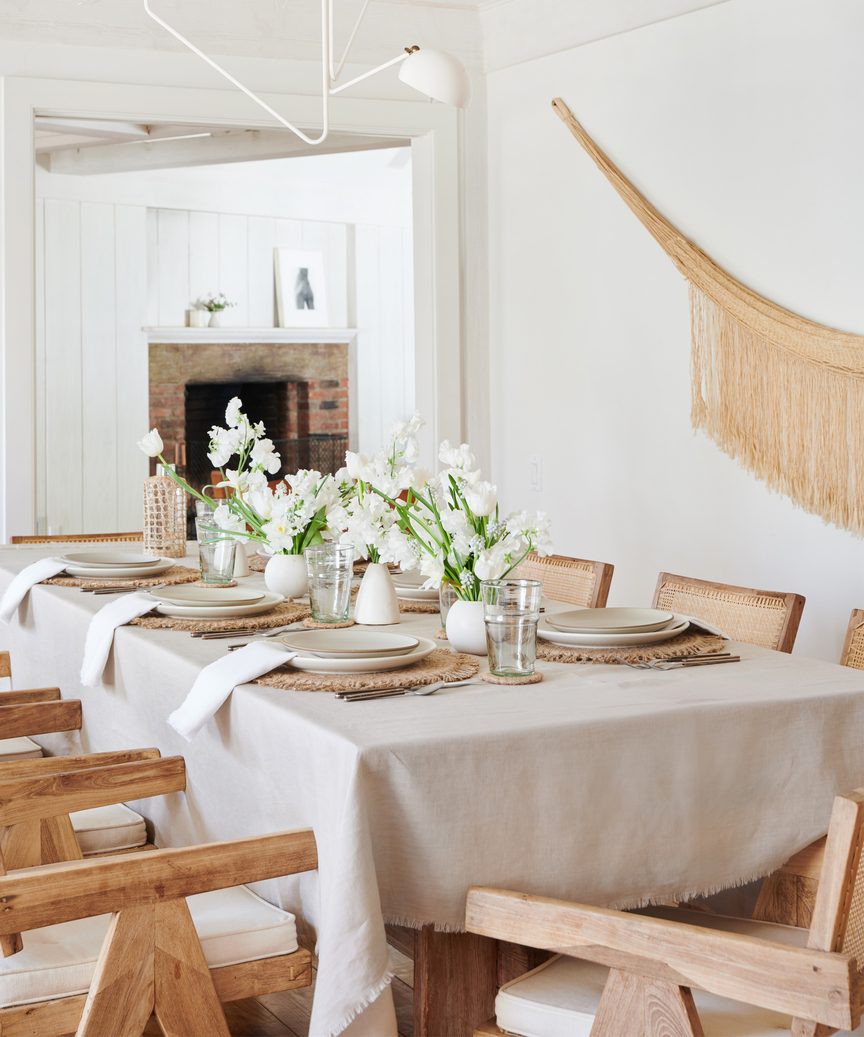
Table of Contents
Why a Tablecloth Matters in Dining Spaces
Types of Tablecloth Fabrics
How to Measure for the Perfect Fit
Styling a Tablecloth for Different Occasions
Seasonal Trends and Popular Colors
Maintenance and Care Tips
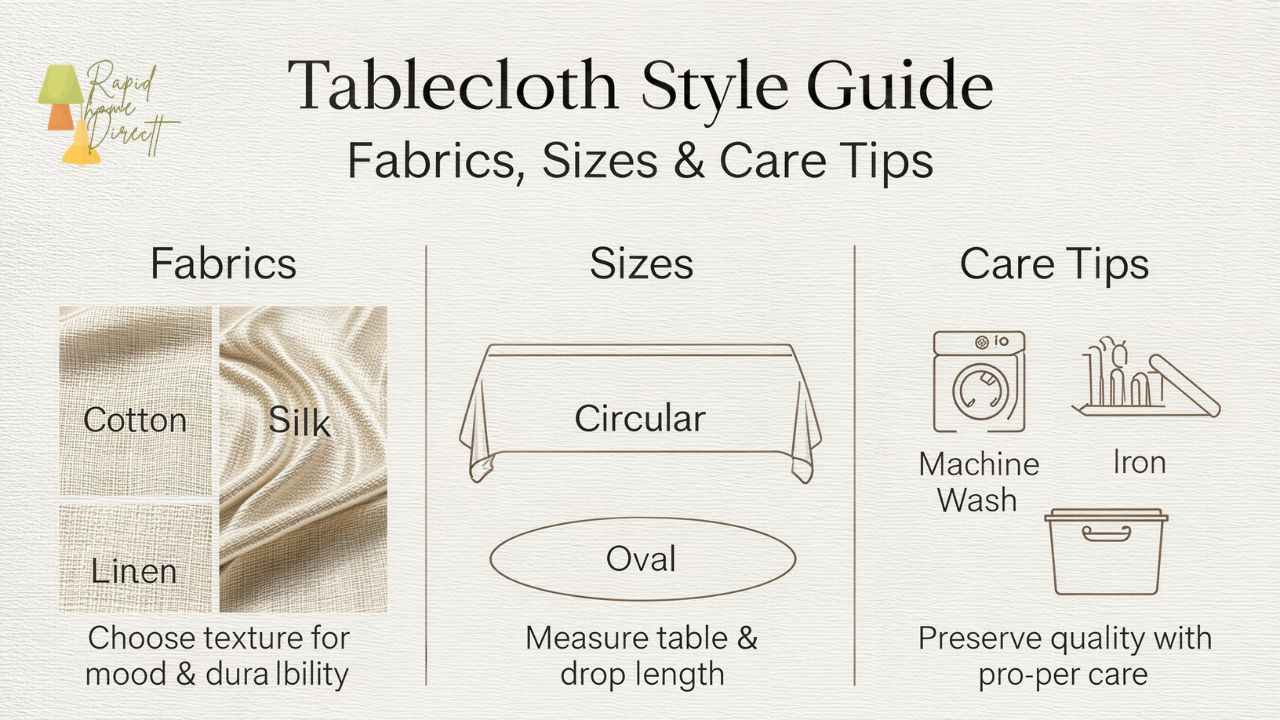
Infographic: Tablecloth Size & Fabric Guide
Personal Background: Designers Who Elevated Table Styling
Frequently Asked Questions
Conclusion
Why a Tablecloth Matters in Dining Spaces
A dining table without a covering can feel bare. However, once you add a tablecloth, the entire space softens visually and emotionally. It reduces noise from plates and cutlery, protects delicate finishes, and creates a welcoming atmosphere.
Interior designers often describe dining linens as “the foundation of tablescape design.” Without them, centerpieces may look disconnected. With them, every decorative element—from candles to floral arrangements—feels cohesive.
According to home decor surveys, over 70% of homeowners refresh dining textiles seasonally instead of investing in new furniture. That’s because swapping fabrics is an affordable way to reinvent a room.

Types of Tablecloth Fabrics
Fabric choice directly impacts durability, texture, and maintenance.
Linen
Linen tablecloth options are beloved for their natural texture and breathable quality. They wrinkle easily, but many consider that relaxed look part of their charm.
Cotton
Cotton is versatile and budget-friendly. It’s soft, washable, and ideal for everyday use.
Polyester
Polyester blends resist stains and wrinkles, making them practical for busy families.
Silk and Satin
For formal occasions, silk or satin adds elegance and sheen. These fabrics require gentle handling.
Vinyl and Oilcloth
Perfect for outdoor dining or households with children, vinyl surfaces wipe clean easily.
| Fabric | Best For | Maintenance Level | Durability |
|---|---|---|---|
| Linen | Modern & rustic | Moderate | High |
| Cotton | Daily use | Easy | Moderate |
| Polyester | Family dining | Very easy | High |
| Silk | Formal events | Delicate | Moderate |
| Vinyl | Outdoor tables | Very easy | High |
Understanding material ensures your tablecloth aligns with your lifestyle.
How to Measure for the Perfect Fit
Size determines elegance. Too short looks awkward. Too long can feel overwhelming.
Standard Drop Length
- Casual dining: 6–8 inches
- Formal dining: 10–15 inches
- Floor-length (weddings): 29–30 inches
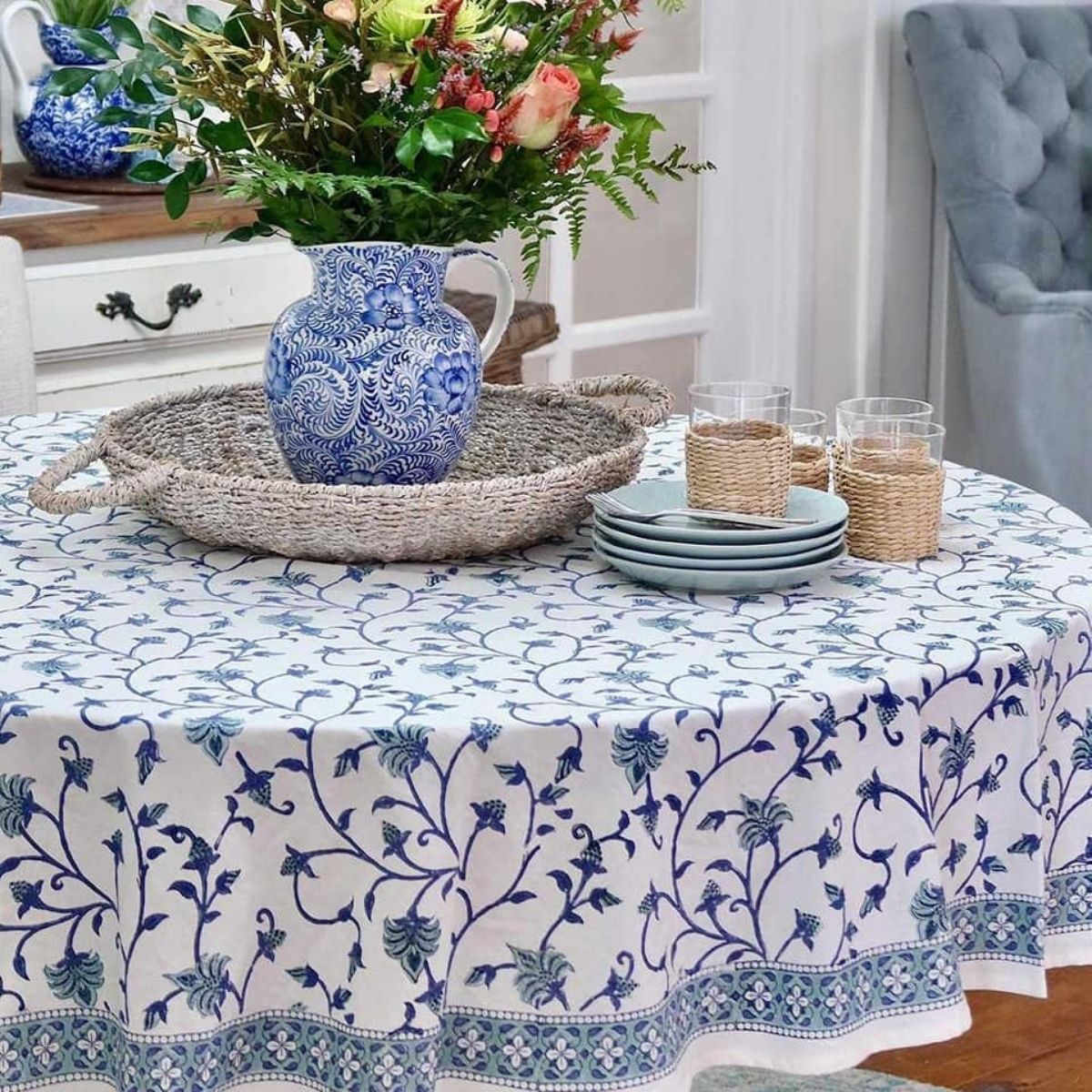
Measure your table’s length and width. Add twice the desired drop to each measurement.
Round Tables
Measure diameter and add drop length twice. A properly sized tablecloth enhances symmetry and proportion.
Styling a Tablecloth for Different Occasions
The beauty of a tablecloth lies in its adaptability.
Everyday Dining
Neutral cotton fabrics in beige or gray create understated elegance.
Holiday Gatherings
Choose bold colors like red, emerald, or navy paired with metallic accents.
Weddings & Formal Events
Crisp white or ivory linen with layered runners creates timeless sophistication.
Rustic Farmhouse Look
Natural linen with wooden chargers and simple greenery feels warm and inviting.

Seasonal Trends and Popular Colors
Seasonal updates are simple yet impactful.
- Spring: Pastels and floral prints
- Summer: Light linens and coastal blues
- Autumn: Earth tones like burnt orange
- Winter: Deep jewel tones and velvet textures
Trend reports show textured linens and layered fabrics gaining popularity, particularly in social media-driven home styling communities.
Maintenance and Care Tips
Proper care extends the life of your tablecloth.

Washing Guidelines
- Always read care labels.
- Wash cotton and linen in cold water.
- Avoid bleach unless fabric permits.
Ironing and Storage
Iron while slightly damp to reduce wrinkles. Store folded neatly in a dry cabinet.
Stain Removal
Treat spills immediately. Baking soda can absorb fresh stains before washing.
Regular maintenance preserves both appearance and durability.
Infographic: Tablecloth Size & Fabric Guide

Quick Buying Checklist:
✔ Measure table dimensions
✔ Decide drop length
✔ Choose fabric based on lifestyle
✔ Consider season and decor theme
✔ Check washing instructions
Personal Background: Designers Who Elevated Table Styling
The renewed interest in curated dining spaces can be traced to influential interior designers and lifestyle brands.
Joanna Gaines popularized layered farmhouse dining setups through Magnolia, turning everyday dining into a design statement. Her success in home decor ventures significantly boosted her estimated net worth into the multi-million-dollar range. Similarly, designers like Nate Berkus emphasized that dining decor should feel personal and intentional.
Their philosophy was simple: small design elements, such as a thoughtfully chosen tablecloth, create memorable experiences. Their impact reshaped how modern homeowners view table styling—not as a necessity, but as a storytelling opportunity.

Frequently Asked Questions
What size tablecloth do I need?
Measure your table and add twice the desired drop length for proper coverage.
Can I use a tablecloth without placemats?
Yes. Many modern setups use a tablecloth alone for a cleaner aesthetic.
How do I prevent slipping?
Use table pads or non-slip liners underneath.
Are tablecloths outdated?
Not at all. They remain popular in both contemporary and traditional homes.
Which fabric is best for everyday use?
Cotton or polyester blends offer durability and easy maintenance.
How often should I wash a tablecloth?
After heavy use or visible stains. Light-use linens can be washed biweekly.
Can I layer a runner over a tablecloth?
Absolutely. Layering adds texture and depth to your tablescape.
Are vinyl tablecloths stylish?
Modern designs offer chic patterns, making them both practical and decorative.
Conclusion
A tablecloth may seem like a simple fabric layer, but its influence is undeniable. It protects your furniture, enhances your decor, and creates an inviting atmosphere for meals and memories. By understanding fabric choices, sizing, and care, you can select a covering that reflects your style and stands the test of time.
Sometimes, it’s the quiet details—like the gentle drape of fabric across a dining table—that transform everyday moments into meaningful experiences.