
Step outside for a moment and imagine your patio without a rug. It probably feels unfinished, maybe even a little cold. Now picture the same space layered with outdoor rugs—suddenly, it’s warm, inviting, and thoughtfully designed.
Outdoor rugs do more than cover concrete or decking. They define seating areas, soften hard surfaces, and bring personality to open-air spaces. Whether you have a sprawling backyard, a compact balcony, or a poolside lounge, the right rug transforms the atmosphere instantly.
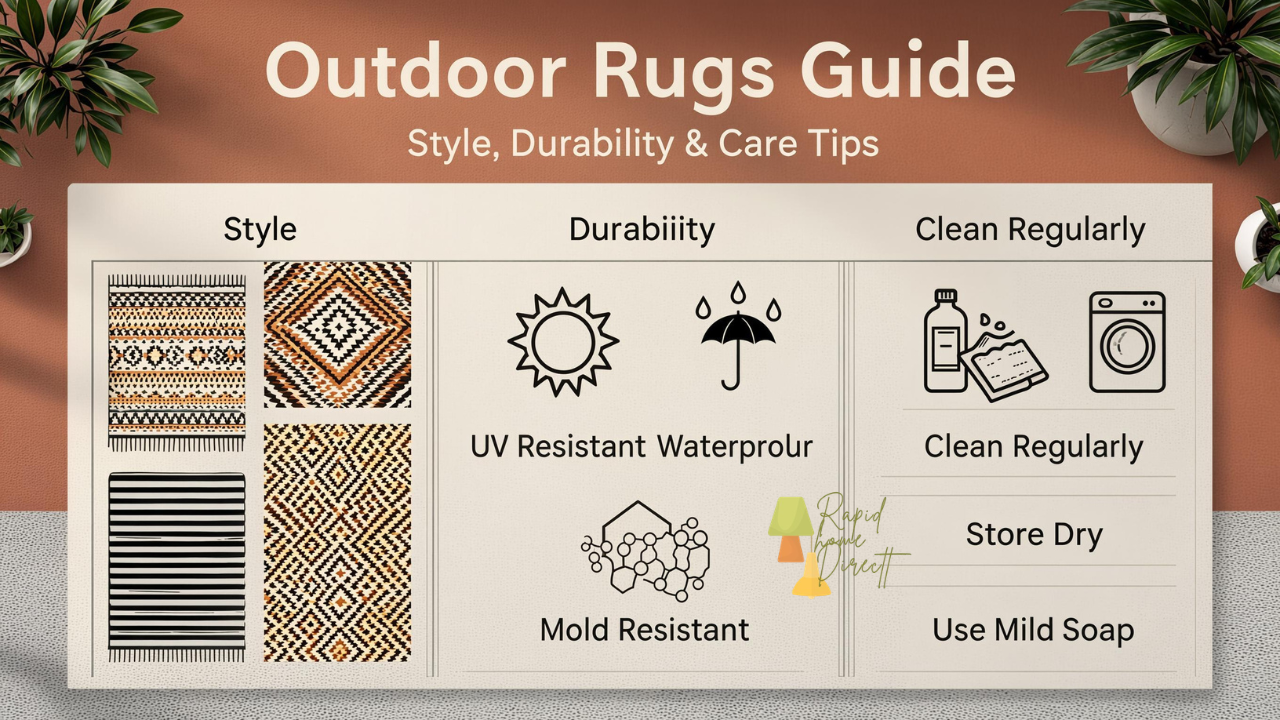
In reality, choosing outdoor rugs isn’t just about color or pattern. It’s about durability, weather resistance, and understanding how materials behave under sun, rain, and daily foot traffic. This guide walks you through everything you need to know—from fabrics and sizing to care, styling, and long-term investment value.
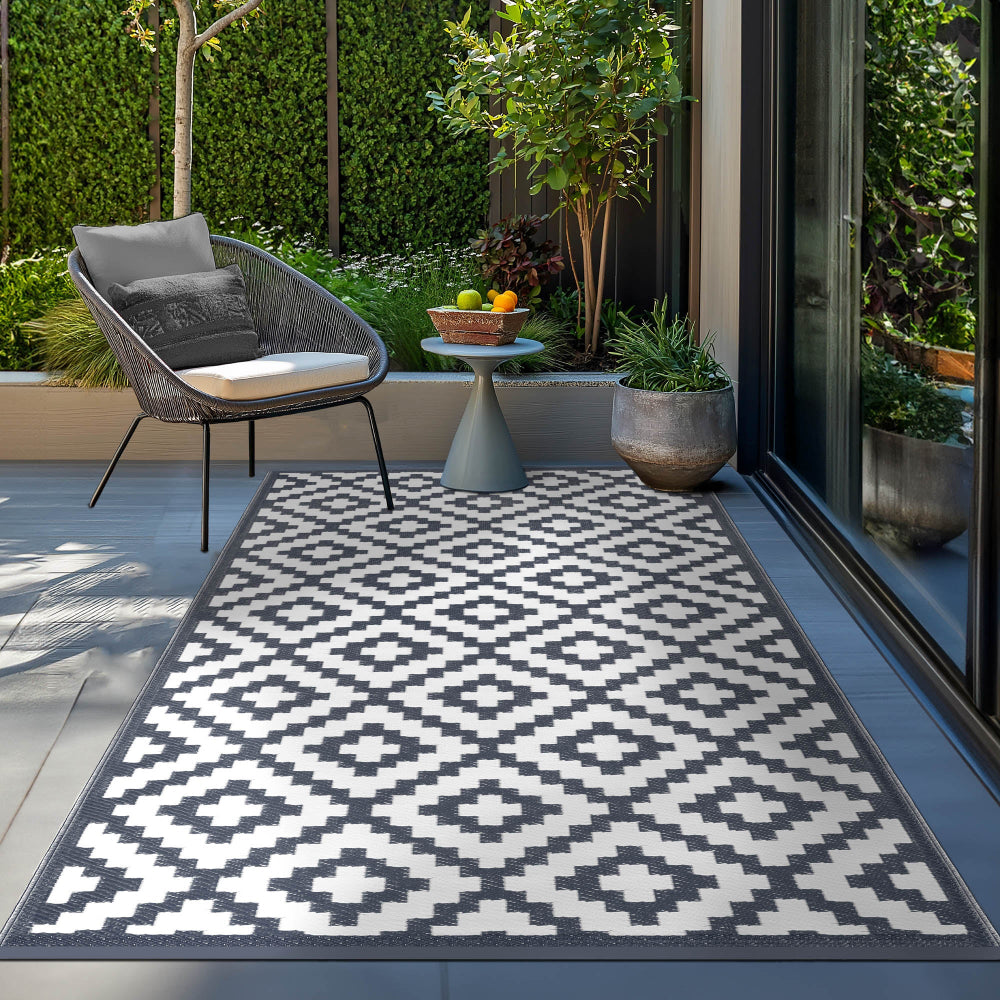
Table of Contents
Why Outdoor Rugs Matter in Exterior Design
Materials Used in Outdoor Rugs
Choosing the Right Size and Placement
Styling Ideas with Outdoor Rugs
Weather Resistance and Durability
Cleaning and Maintenance Guide
Infographic: Outdoor Rug Buying Checklist
Personal Background: Designers Who Popularized Outdoor Living
Frequently Asked Questions
Conclusion
Why Outdoor Rugs Matter in Exterior Design
A well-placed rug can visually anchor your furniture and create zones in open layouts. In fact, interior designers often say rugs are the “foundation layer” of any styled space—indoors or out.
Outdoor rugs soften rigid materials like stone, concrete, or wood decking. They add comfort underfoot, especially in hot climates where surfaces heat up quickly. Beyond comfort, they enhance aesthetics by tying together furniture colors and decorative elements.
According to home improvement surveys, over 68% of homeowners invest in patio upgrades to increase relaxation and entertainment value. Rugs are among the most affordable upgrades with the biggest visual impact.
Materials Used in Outdoor Rugs
The key difference between indoor and outdoor rugs lies in material engineering. Outdoor environments demand resilience.
Polypropylene
One of the most popular materials, polypropylene is moisture-resistant, mold-resistant, and easy to clean. It withstands heavy foot traffic and intense sunlight.
Polyester
Polyester rugs offer vibrant color retention and moderate durability. They’re often softer but may require more maintenance in extreme weather.
Natural Fibers (Jute & Bamboo)
These provide earthy aesthetics but are best suited for covered patios. Excess moisture can shorten their lifespan.
Recycled Plastic
Eco-conscious buyers often choose recycled plastic rugs. They’re lightweight, waterproof, and sustainable.
Here’s a comparison table:
| Material | Water Resistance | UV Protection | Best For |
|---|---|---|---|
| Polypropylene | Excellent | High | Open patios |
| Polyester | Good | Moderate | Semi-covered decks |
| Jute | Low | Low | Covered balconies |
| Recycled Plastic | Excellent | High | Poolside areas |
Understanding materials ensures your outdoor rugs last multiple seasons instead of just one.
Choosing the Right Size and Placement
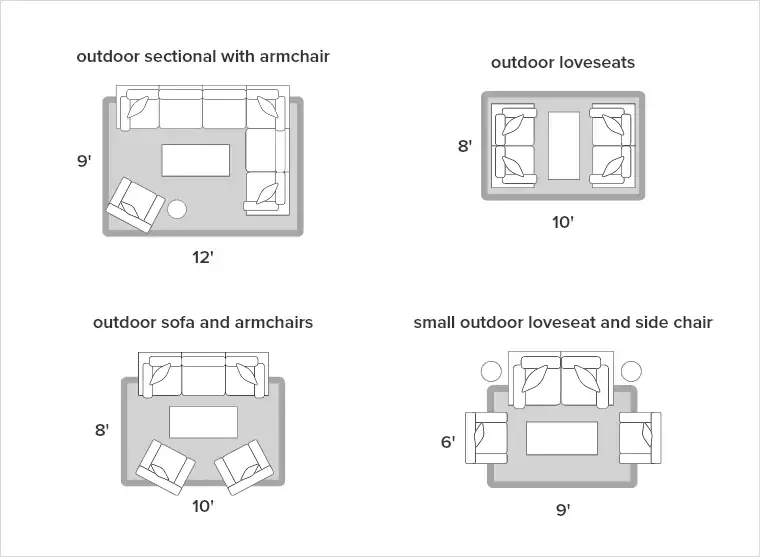
Size can make or break the design. A rug that’s too small looks disconnected; one too large overwhelms the space.
Standard Sizing Tips
- 5×7 ft: Small seating arrangements
- 8×10 ft: Standard patio sofas
- 9×12 ft: Large entertainment areas
Furniture placement rule: At minimum, front legs of seating should sit on the rug. For cohesive layouts, place all furniture legs fully on it.
Shape Considerations
- Rectangular: Most versatile
- Round: Great for small patios
- Runner: Ideal for narrow balconies
Thoughtful placement enhances flow and balance.
Styling Ideas with Outdoor Rugs
Outdoor styling mirrors indoor trends. However, textures and colors often lean more relaxed.
Coastal Theme
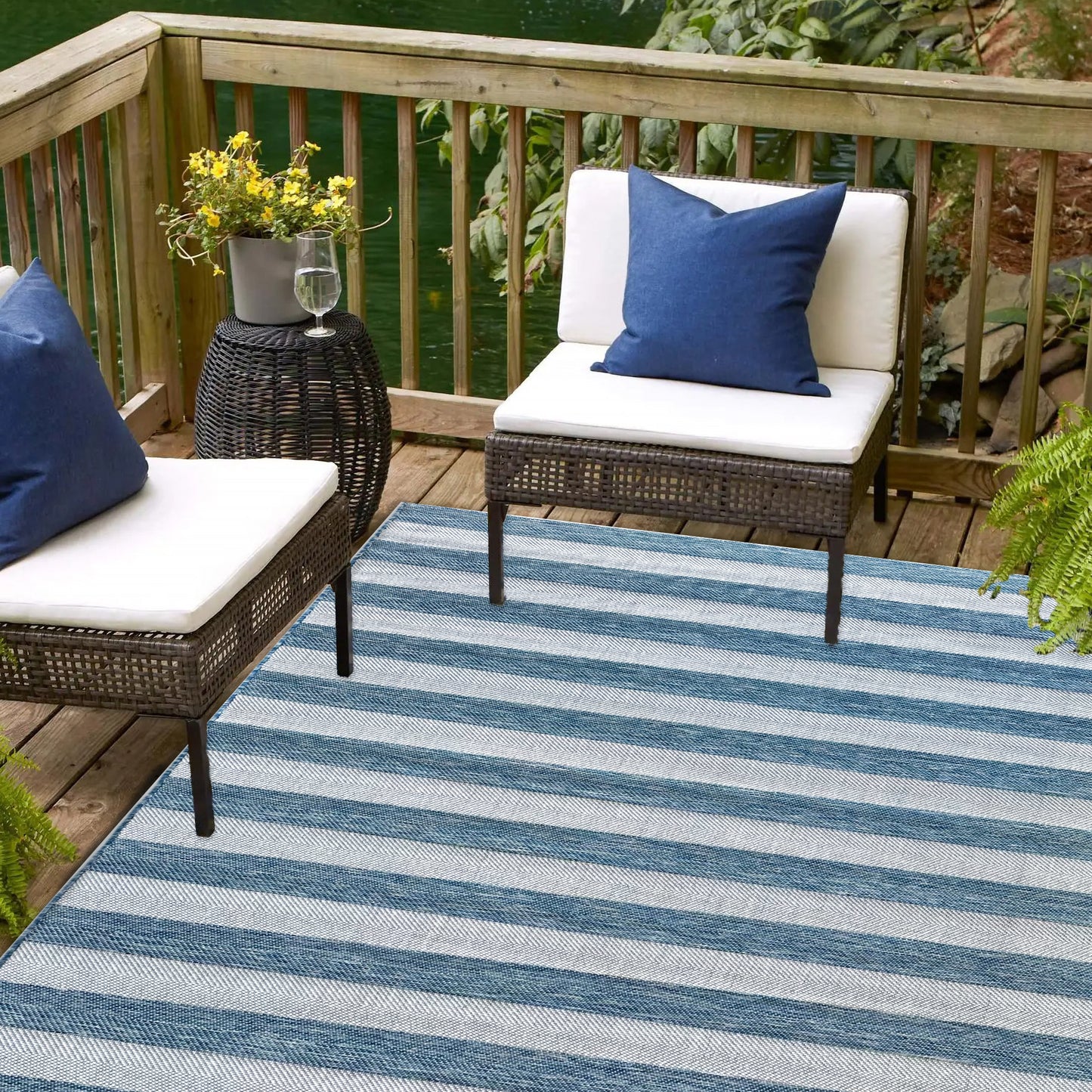
Use blue-and-white striped rugs paired with wicker furniture and linen cushions.
Bohemian Vibe
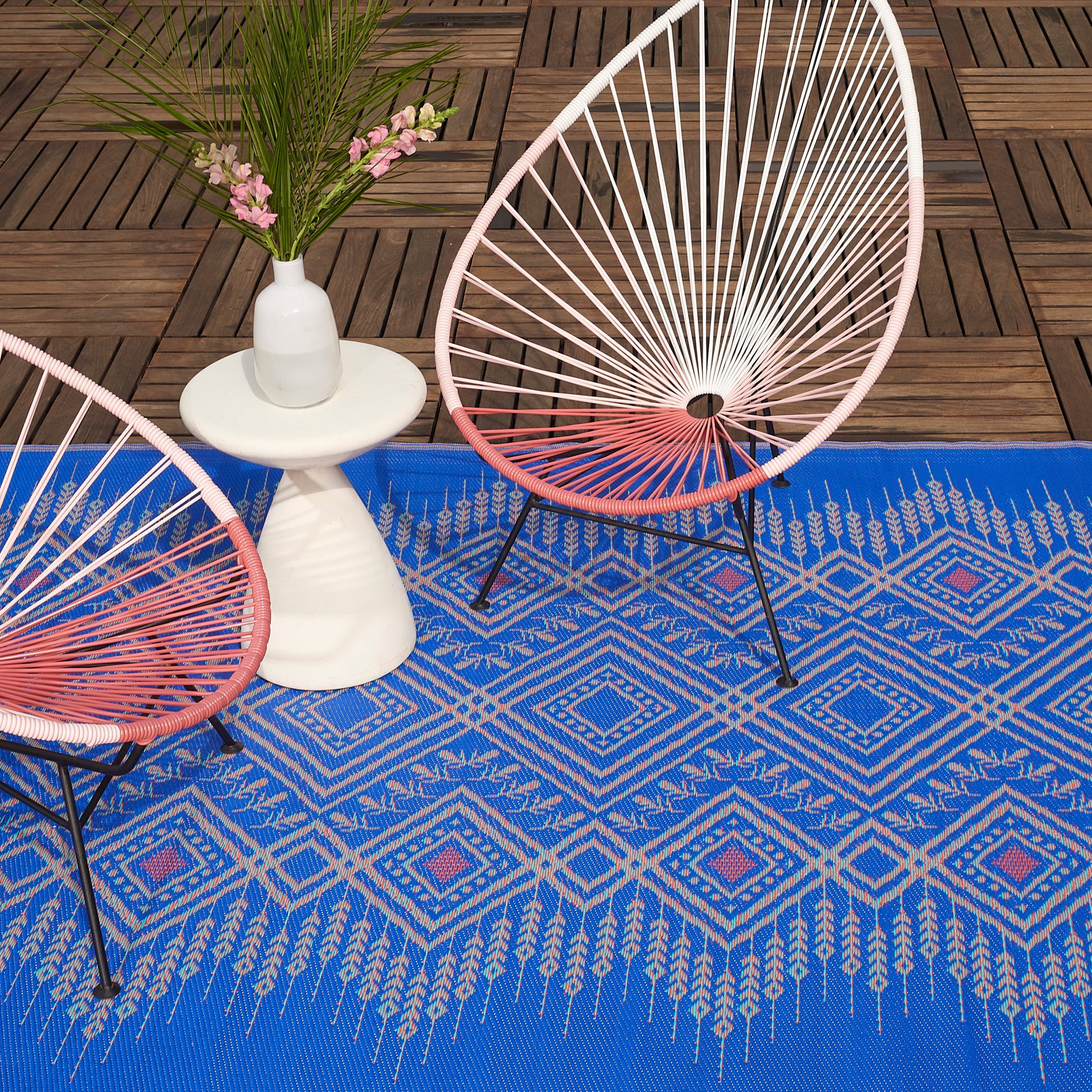
Layer patterned rugs with poufs and lantern lighting for a free-spirited look.
Modern Minimalist
Choose monochrome or geometric patterns for clean-lined spaces.
Rustic Charm
Neutral woven textures complement wooden decks beautifully.
Weather Resistance and Durability
Not all outdoor rugs are created equal. UV rays can fade colors, while moisture encourages mildew. High-quality polypropylene rugs resist fading for 3–5 years depending on exposure.
In rainy regions, quick-dry properties are essential. Look for rugs labeled “mold and mildew resistant.” In sunny climates, UV stabilization is critical to maintain vibrancy.
Investing in quality upfront prevents frequent replacements.
Cleaning and Maintenance Guide

Maintaining outdoor rugs is surprisingly simple.
Routine Cleaning
- Shake out debris weekly
- Vacuum with low suction
- Rinse with garden hose monthly
Deep Cleaning
Use mild soap and water. Avoid harsh bleach unless manufacturer-approved.
Seasonal Storage
Roll (never fold) and store in a dry location during extreme winter months.
Consistent care extends lifespan significantly.
Infographic: Outdoor Rug Buying Checklist

Quick Buying Checklist:
✔ Measure space accurately
✔ Confirm water and UV resistance
✔ Choose non-slip backing
✔ Match with furniture style
✔ Check cleaning instructions
Personal Background: Designers Who Popularized Outdoor Living
Outdoor living as a lifestyle gained momentum through designers like Joanna Gaines and other home lifestyle entrepreneurs who blurred the line between interior and exterior decor.
Brands specializing in outdoor furnishings now generate multi-million-dollar annual revenues by combining comfort, durability, and aesthetic innovation. The success of these brands highlights how consumers increasingly view patios as extensions of indoor living spaces.
The shift isn’t just aesthetic—it’s emotional. People crave relaxing environments at home, and outdoor rugs play a surprisingly central role in creating those comforting spaces.

Frequently Asked Questions
Are outdoor rugs waterproof?
Most are water-resistant, not fully waterproof. They dry quickly and resist mildew.
Can outdoor rugs stay outside year-round?
Yes in mild climates, but storing during extreme winters prolongs life.
Do outdoor rugs fade in sunlight?
Lower-quality rugs may fade. UV-treated materials last longer.
What’s the best material for outdoor rugs?
Polypropylene offers the best balance of durability and affordability.
How do I prevent slipping?
Use rug pads designed for outdoor surfaces.
Can outdoor rugs be used indoors?
Absolutely. Many homeowners use them in kitchens or mudrooms due to durability.
How long do outdoor rugs last?
With proper care, 3–5 years or more depending on exposure.
Are eco-friendly options available?
Yes, recycled plastic rugs are popular sustainable choices.
Conclusion
Outdoor rugs are more than decorative accents—they’re foundational design elements that bring warmth, comfort, and structure to exterior spaces. By selecting durable materials, choosing the right size, and maintaining them properly, you can transform patios, balconies, and decks into inviting retreats.
In the end, creating a beautiful outdoor space doesn’t require a massive renovation. Sometimes, all it takes is the right rug to make everything feel complete.