
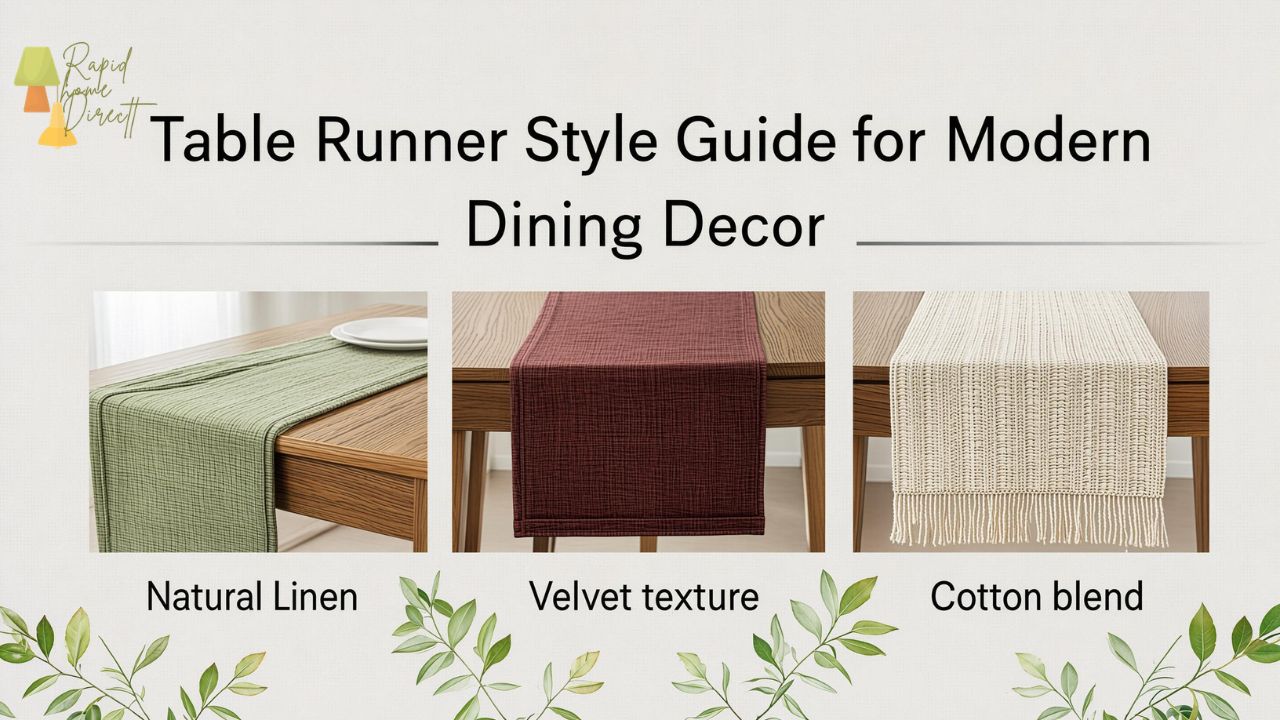
There’s a quiet kind of magic that happens when you walk into a dining room and something just feels right. It’s not always the chairs or the chandelier. Often, it’s a simple table runner that pulls everything together without demanding attention.
A table runner might seem like a small decorative detail, but in reality, it’s one of the most versatile styling tools in home decor. It adds texture, color, and personality to your dining space while protecting surfaces from scratches, heat, and spills.
Whether you’re hosting holiday dinners, styling a cozy breakfast nook, or refreshing your home for the season, understanding how to choose and use a table runner can instantly elevate your space from ordinary to intentional.

Table of Contents
Why a Table Runner Matters in Home Decor
Types of Table Runner Fabrics and Materials
Choosing the Right Table Runner Size
Styling Ideas for Every Occasion
Seasonal and Holiday Table Runner Trends
Caring for Your Table Runner
Personal Background: Designers Who Popularized Table Styling
Frequently Asked Questions
Conclusion
Why a Table Runner Matters in Home Decor
At first glance, it might look like just a strip of fabric. However, a table runner serves both functional and aesthetic purposes. It protects wooden surfaces from hot dishes and accidental spills while acting as a foundation for centerpieces, candles, or floral arrangements.
Interior designers often describe it as the “visual anchor” of a dining table. Without one, a large table can feel empty or unfinished. With it, even a simple space feels curated. In open-concept homes, especially, a runner defines the dining zone and creates cohesion between kitchen and living areas.
From casual brunches to formal dinners, the table runner adapts seamlessly. It can soften a glass tabletop or add contrast to a solid wood dining surface.

Types of Table Runner Fabrics and Materials
Material selection affects durability, style, and maintenance. Let’s explore the most popular options.
Linen
Linen is timeless. It’s breathable, natural, and perfect for minimalist or Scandinavian interiors. Its slightly wrinkled texture adds charm rather than looking messy.
Cotton
Cotton runners are affordable and easy to clean. They work well for everyday dining and family homes.
Polyester
Polyester blends are stain-resistant and low-maintenance, making them ideal for busy households.
Silk and Satin
For formal settings or weddings, luxurious fabrics add elegance and sheen.
Jute and Burlap
These natural fibers complement rustic or farmhouse decor themes.
Here’s a quick comparison:
| Material | Durability | Maintenance | Best For |
|---|---|---|---|
| Linen | High | Moderate | Modern decor |
| Cotton | Moderate | Easy | Daily use |
| Polyester | High | Very easy | Families |
| Silk | Moderate | Delicate | Formal events |
| Jute | High | Spot clean | Rustic settings |
Choosing the right material depends on your lifestyle and aesthetic goals.
Choosing the Right Table Runner Size
Size matters more than most people realize. A poorly fitted runner can disrupt visual balance.

Standard Length Guidelines
- For formal settings: Allow 6–10 inches to hang over each end.
- For casual settings: Keep it flush with the table edges.
Width Considerations
Most runners range from 12 to 16 inches wide. Ensure there’s enough space on either side for plates and glassware.
Round Tables
For round tables, you can:
- Use a shorter centered runner
- Layer it over a tablecloth for dimension
Getting proportions right ensures the decor feels intentional rather than accidental.
Styling Ideas for Every Occasion
The beauty of a table runner lies in its versatility.
Everyday Dining
Keep it simple with neutral tones like beige, gray, or soft white. Pair with ceramic bowls and minimal greenery.
Dinner Parties
Add candles, layered placemats, and metallic accents for drama.
Rustic Farmhouse Look
Combine burlap textures with mason jar centerpieces and wooden chargers.
Modern Minimalist
Opt for monochrome palettes. A black runner on a white table creates bold contrast.
Weddings and Special Events
Silk or satin fabrics paired with floral garlands create romantic ambiance.

Seasonal and Holiday Table Runner Trends
Seasonal decor is one of the easiest ways to refresh your home without major investment.
Spring
Light fabrics with floral patterns and pastel tones.
Summer
Coastal blues, woven textures, and airy linen materials.
Autumn
Warm hues like burnt orange, mustard, and deep red.
Winter
Velvet textures and metallic embroidery for festive elegance.
Design experts report that small decor swaps—like updating runners—are among the most cost-effective ways to refresh interiors. According to home styling surveys, over 60% of homeowners prefer updating textiles seasonally instead of investing in new furniture.
Caring for Your Table Runner
Proper care extends lifespan significantly.

Washing Tips
- Always check fabric labels.
- Wash linen and cotton in cold water.
- Avoid harsh detergents for delicate fabrics.
Storage
Fold neatly and store in a dry area. For silk or specialty materials, use breathable garment bags.
Stain Prevention
Use placemats under heavy dishes. Spot-clean spills immediately to prevent permanent marks.
Personal Background: Designers Who Popularized Table Styling
The modern obsession with curated dining tables owes much to influential interior designers and lifestyle entrepreneurs.
Joanna Gaines, for instance, popularized layered farmhouse tablescapes through her Magnolia brand. Her net worth is estimated in the tens of millions, largely fueled by home decor ventures and media presence. Similarly, designers like Nate Berkus transformed everyday table styling into a lifestyle statement.
These professionals understood that small details create emotional impact. A thoughtfully placed table runner can transform family dinners into memorable experiences. Their success stories highlight how decor accessories became powerful tools in branding and interior storytelling.

Frequently Asked Questions
What is the purpose of a table runner?
It protects table surfaces while adding decorative style and visual structure.
Can I use a table runner without a tablecloth?
Yes. Many modern settings use runners alone for a cleaner look.
How long should a table runner be?
Typically 6–10 inches longer than the table on each side for formal dining.
Are table runners outdated?
Not at all. They remain popular in both contemporary and traditional interiors.
Can I layer a table runner?
Yes, layering over a tablecloth or another fabric adds depth and texture.
What color table runner is most versatile?
Neutral tones like beige, gray, or white work year-round.
How do I prevent slipping?
Use non-slip pads or choose heavier fabrics like linen or jute.
Are table runners suitable for round tables?
Yes, especially when centered properly or layered creatively.
Conclusion
A table runner may seem small, but its impact is significant. It protects your furniture, enhances your decor, and creates a welcoming atmosphere for gatherings big or small. By choosing the right fabric, size, and seasonal style, you can refresh your dining space effortlessly.
Sometimes, it’s not about changing the entire room. It’s about adjusting one thoughtful detail—and watching the entire space come alive.